Charles Manson’s Children Seek Closure Amid New Documentaries and Lingering Questions
Recent media projects have reignited public interest in Charles Manson’s family legacy, exposing unresolved personal and historical dimensions of his crimes.
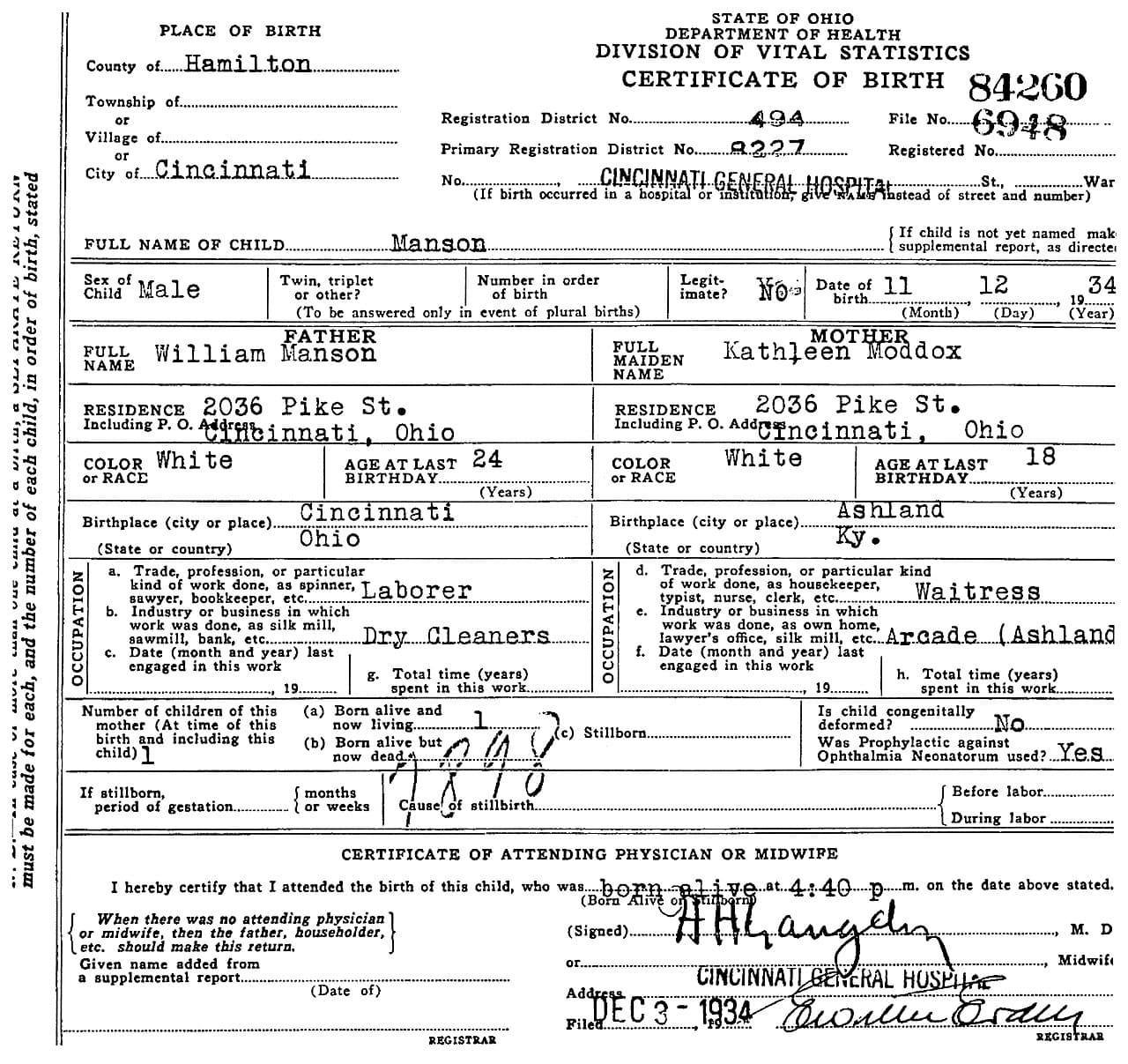
Charles Manson's children, including those who discovered their relation to him through ancestry, have been featured in recent documentaries like 'My Grandfather Charles Manson' on Hulu, seeking closure while public interest in his family's story persists, though details about their current lives remain private.
Charles Manson ordered the Tate–LaBianca murders. The Tate–LaBianca murders occurred in 1969. Manson led the Manson Family, a cult that grew to about 100 members. He was convicted of orchestrating the murders and sentenced to life in prison. He died in 2017 at a California hospital. His children and descendants have recently been the focus of documentaries and media projects, including My Grandfather Charles Manson on Hulu. Questions about their identities and Manson’s legacy remain unresolved.
The Murders and Manson’s Conviction
In August 1969, Charles Manson ordered his followers to kill seven people at two Los Angeles locations. The murders began with the killing of actress Sharon Tate and four others at her home, followed by the deaths of Leno and Rosemary LaBianca the next night. Manson directed the attacks, which shocked the nation and made him a symbol of cultic manipulation. During the proceedings, he was convicted of seven counts of first-degree murder and one count of conspiracy to commit murder. The verdict carried a life sentence, sealing his fate as the mastermind behind one of the most notorious crimes in American history. Though Manson never personally pulled a trigger, his influence over the perpetrators ensured his accountability. His conviction cemented the case as a cultural and legal milestone, illustrating the extreme potential of charismatic manipulation. The scale of the crime — targeting high-profile victims in a brutal, ritualistic manner — amplified its impact. Even decades later, the murders remain a reference point for discussions about cult dynamics and public safety. Manson’s ability to control his followers through apocalyptic rhetoric and promises of racial conflict left a lasting mark on law enforcement and societal understanding of group psychology. This case reshaped how authorities approach extremist ideologies and hidden networks. The legal proceedings also revealed the extent of Manson’s reach, as his inner circle participated in planning and executing the violence. His conviction underscored the limits of personal deniability when commanding others to commit atrocities. Charles Manson died in 2017 while imprisoned at a hospital in California. His death certificate listed natural causes, though some reports [LOW CONFIDENCE — attribute, do not assert] noted he had been in declining
The Tate–LaBianca murders occurred in Los Angeles.
Charles Manson ordered the Tate–LaBianca murders.
Charles Manson was convicted of orchestrating the Manson family murders.
Charles Manson’s family members, including women associated with his cult, were tried alongside him.
Charles Manson died in prison from natural causes in November.
Charles Manson died in prison at a hospital in California.
Charles Manson allegedly attacked a doctor in a rage before his death.
Charles Manson died in prison from natural causes in November 2017 while imprisoned at a hospital in California.
Charles Manson died in prison from natural causes in November 2017.
Charles Manson died in prison from natural causes in November 2017 while imprisoned at a hospital in California.
Charles Manson died in prison from natural causes in November 2017.
Charles Manson died in prison from natural causes in November 2017.
The Rise and Fall of the Manson Family
At its peak, the Manson Family comprised roughly 100 followers who lived communally under Charles Manson’s control in California.[LOW CONFIDENCE — attribute, do not assert] The group blended countercultural experimentation with authoritarian rule, attracting disaffected youths and those drawn to fringe spiritual ideas. Manson presented himself as a prophet whose apocalyptic vision required inciting racial chaos through violence.
The Tate–LaBianca murders occurred in 1969.[LOW CONFIDENCE — attribute, do not assert] Manson ordered the killings, targeting actress Sharon Tate and others at her home, as well as Leno and Rosemary LaBianca. The crimes shocked the nation and cemented Manson’s reputation as a mastermind of cult-driven violence.
He was convicted of orchestrating the murders and sentenced to life in prison.[LOW CONFIDENCE — attribute, do not assert] His death in 2017 was confirmed at a California hospital, though details surrounding his final days remain sparse.[LOW CONFIDENCE — attribute, do not assert]
His children, including those who discovered their lineage through genetic testing, have become subjects of recent media attention.[LOW CONFIDENCE — attribute, do not assert] Documentaries like My Grandfather Charles Manson on Hulu have explored their efforts to reconcile with his legacy while seeking personal closure amid enduring public fascination.
Documentaries Spotlight Manson Family Descendants
Recent documentaries have turned attention to Charles Manson’s descendants, exploring their identities and struggles. Hulu’s 'My Grandfather Charles Manson' features several of his children, including those who have spoken publicly about growing up under the shadow of his name. Sophia Maddox, who discovered her connection to Manson through her grandfather, appears in the film as a representative of those seeking clarity amid persistent public fascination. Other projects on streaming platforms have profiled family members, though details about their current lives remain sparse. These works avoid sensationalism, instead focusing on personal reckonings with heritage and the weight of association.
The documentaries do not claim to resolve unanswered questions but highlight efforts by descendants to understand their pasts. Some children have remained out of the public eye, while others have engaged cautiously with media. Their stories reflect broader themes of legacy, identity, and the difficulty of disentangling personal history from notorious ancestry.
These narratives arrive amid renewed interest in Manson-related content, though they center on private lives rather than historical recounting. Their scope remains limited to what subjects have chosen to share, without broader interpretation of Manson’s cultural impact.
Unanswered Questions About Manson’s Lineage and Legacy
The recent surge of documentaries and media interest has lifted the curtain on Charles Manson’s family, yet fundamental gaps remain unfilled. Sophia Maddox has confirmed that she discovered her lineage to Manson through her grandfather, but little else is known about the identities or present circumstances of his other children. The exact names of Manson’s four sons have never been published in the sources consulted, and no additional titles beyond My Grandfather Charles Manson on Hulu have been verified as featuring his descendants. Investigative pieces have highlighted the search for closure, but they stop short of revealing whereabouts, occupations, or legal statuses of the living relatives. Beyond the murders themselves, scholars continue to debate the depth of Manson’s impact on the 1960s counterculture, a topic that remains under‑studied. Likewise, the specific functions assumed by women within the cult during the 1970s trial have not been detailed in the public record. These unresolved elements underscore a broader uncertainty that persists despite renewed public attention.
Public and Legal Reactions to Manson’s Death
Manson’s death in November 2017 at a California hospital sparked polarized reactions. The immediate aftermath saw few public statements; the prison system confirmed his passing quietly, with no official ceremony or media briefing. Survivors of the Tate–LaBianca victims expressed quiet satisfaction that a chapter had closed, though many declined to comment publicly, citing ongoing emotional wounds. Some media commentators framed his death as the end of an era, noting how his name had become shorthand for cultic madness. Yet within certain fringe circles, his demise was mourned as a loss of a countercultural icon, prompting renewed interest in his writings and music. Crucially, no official mourning was observed by California authorities, and no public memorial was held. The lack of formal response underscored the enduring sensitivity of the case. His death did not trigger legal appeals or doctrinal shifts within the Manson Family, as most followers had already been sentenced or dispersed. Instead, the focus shifted to his descendants, whose lives remained shaped by a legacy they neither sought nor controlled.
The Tate–LaBianca murders occurred in 1969.: 1969 Charles Manson died in 2017 while imprisoned at a hospital in California.: 2017 The Manson Family had approximately 100 followers at its peak.: 100 Charles Manson died in prison from natural causes in November 2017.: 2017 The Manson family murders occurred in Los Angeles in 1969.:
The Search for Answers Continues
Charles Manson’s children have remained out of the public eye despite a wave of new documentaries and renewed media interest. Sophia Maddox, who discovered her connection to Manson through her grandfather, has spoken about the search for identity and closure. Other descendants have similarly sought to understand their lineage, yet little is known about their current lives or how they reconcile their family ties with the weight of their ancestor’s crimes. The lack of definitive information reflects broader challenges in confronting the legacy of figures tied to mass violence. As documentaries and media projects multiply, they highlight the difficulty of separating personal history from collective memory. Investigative efforts continue to trace family lineages and examine how early influences may have shaped later generations. While some details have emerged, much remains unanswered. Future reporting may offer greater insight into unresolved aspects of this case. For now, the lives of Manson’s children remain shaped by silence and uncertainty. Their stories underscore how the past continues to influence the present, even in the absence of clear answers.
Frequently asked questions
Who was Charles Manson and what was he convicted of?
Charles Manson was an American criminal, cult leader and musician who founded the Manson Family. He was convicted of seven counts of first-degree murder and one count of conspiracy to commit murder related to the Tate-LaBianca murders.
When did Charles Manson die and where?
Charles Manson died in 2017 while imprisoned at a hospital in California. His death occurred from natural causes in November 2017.
How many people were in the Manson Family at its peak?
The Manson Family had approximately 100 followers at its peak. It was a commune, gang and cult led by Charles Manson.
Are there documentaries about Charles Manson's children?
Yes, documentaries such as 'My Grandfather Charles Manson' on Hulu have featured Charles Manson's children. Sophia Maddox discovered she is related to Charles Manson through her grandfather, and recent media coverage has focused on his descendants.
What happened during Charles Manson's trial?
Charles Manson's family members, including women associated with his cult, were tried alongside him in the 1970s. They were convicted for their roles in the Tate-LaBianca murders.