Jake Rogers' Journey from Detroit to Boston in a Week of Trades
The Detroit Tigers traded catcher Jake Rogers to the Baltimore Orioles and then the Orioles flipped him to the Boston Red Sox within days, reshaping both clubs' catching corps.
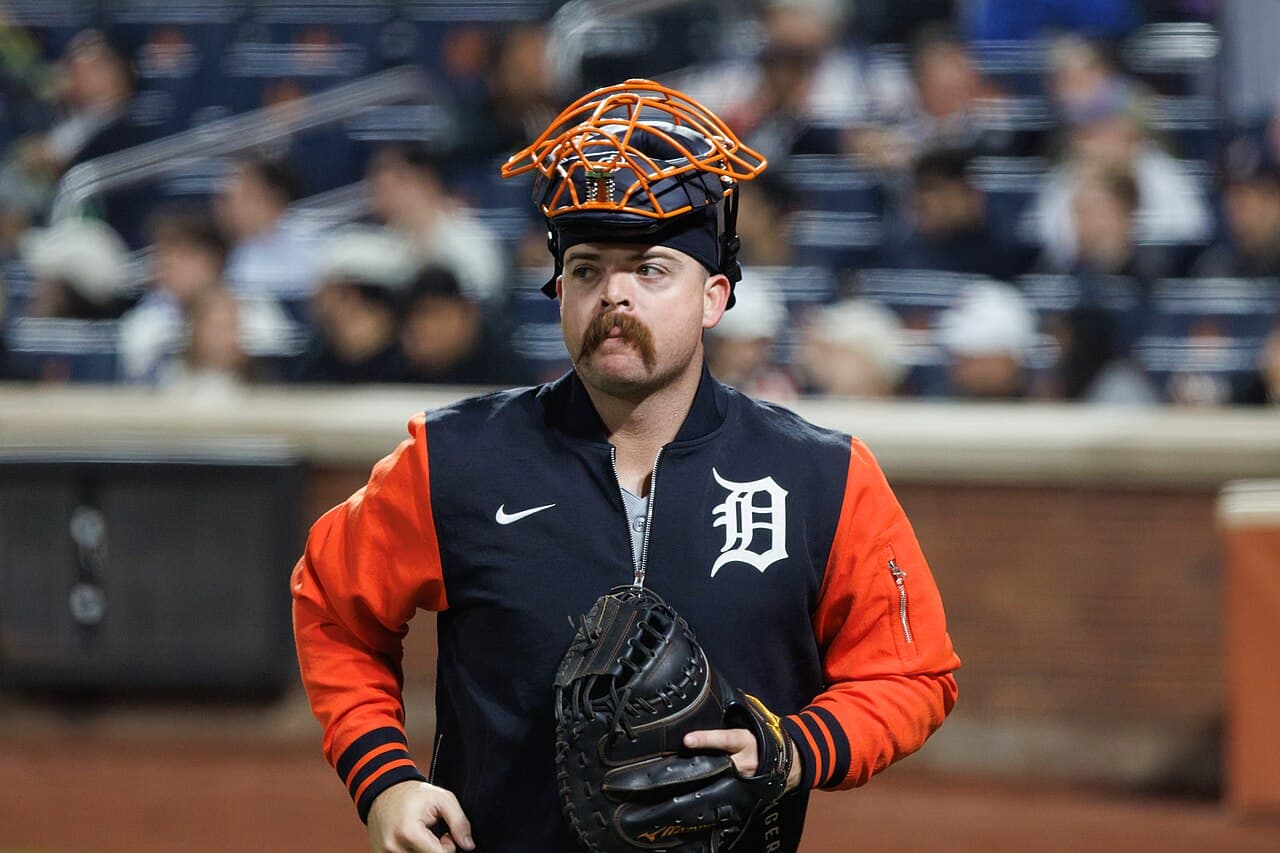
Jake Rogers was traded from the Detroit Tigers to the Baltimore Orioles on July 28, 2026, and then to the Boston Red Sox within days. The moves opened roster spots for Javier Báez and reshaped both teams' catching depth.
The Boston Red Sox defeated the Chicago White Sox in a 13-inning game after rallying multiple times. The Detroit Tigers designated catcher Jake Rogers for assignment on July 28, 2026, to open a roster spot for Javier Báez, who had been reinstated from the 60-day injured list. Rogers had spent nearly a decade with Detroit and published a farewell message to the organization, city, and fans shortly after the move. The Tigers traded Rogers to the Baltimore Orioles for minor league right-handed pitcher Zane Barnhart, who was assigned to Double-A Erie. The trade occurred amid injuries to Baltimore’s catchers Adley Rutschman and Samuel Basallo, creating roster flexibility. Within days, the Orioles sent Rogers and Rutschman to Boston in exchange for pitchers Anthony Eyanson and Kyson Witherspoon, outfielder Enddy Azocar, and catcher Carlos Narváez. Rogers made his Red Sox debut shortly after the trade, though his role remained limited. The sequence of moves reflects a rapid reshuffling of catchers across three teams, underscoring the Tigers’ push to accelerate a rebuild and Boston’s aggressive pursuit of depth. Rogers’ journey highlights how quickly roster decisions can reshape a player’s trajectory in modern baseball.
Rogers' designation and farewell to Detroit
The Detroit Tigers designated catcher Jake Rogers for assignment on July 28, 2026, clearing an active‑roster spot for Javier Báez, who had been reinstated from the 60‑day injured list. The move ended a tenure in Detroit that had stretched close to a decade, a period during which Rogers became a familiar presence behind the plate and a community figure in the city. In a brief statement posted on social media, Rogers thanked the organization, the fans and the city for their support, reflecting on moments that had defined his time in Detroit. He wrote that the decision to move on was “bittersweet” but that he remained proud of the work accomplished with teammates and coaches. The designation was reported by multiple outlets, including theguardian.com and mlb.com, which noted that Rogers had been on the Tigers’ roster since his debut in 2017 and had served as a backup to starter Grayson Greiner before earning more playing time in recent seasons. Rogers’ farewell message concluded with a promise to stay connected with Detroit supporters as he pursued the next chapter of his career.
According to the same reports, the Tigers completed the trade with the Baltimore Orioles shortly after the designation, sending Rogers and catcher Adley Rutschman to Baltimore in exchange for right‑handed pitchers Anthony Eyanson and Kyson Witherspoon, outfielder Enddy Azocar and catcher Carlos Narváez. The Orioles, missing both Rutschman and Samuel Basallo due to injuries, needed roster flexibility, and the deal allowed them to acquire additional depth while shedding salary. Zane Barnhart, the minor‑league right‑hander received from Detroit, was assigned to Double‑A Erie to continue his development. The transaction was first disclosed by cbsnews.com and later confirmed by thefan1075.com, which highlighted that the Orioles intended to evaluate Rogers in a backup role behind their primary catchers. Rogers’ brief stint in Baltimore lasted only a few days before a second trade moved him to Boston. The Red Sox acquired him along with Rutschman from the Orioles, sending a package of prospects to Baltimore in return. Within days of the deal, Rogers made his debut for the Red Sox, entering as a late‑inning substitute in a game against the Chicago White Sox. The Red Sox won the contest in 13 innings, a marathon effort that underscored the team’s resilience but did not feature Rogers in a pivotal defensive role. His appearance marked the final step of a whirlwind week that saw him transition from Detroit to Boston, a whirlwind that drew commentary from analysts on nbcsports.com and sports.yahoo.com. The moves have been framed as part of the Tigers’ broader rebuilding strategy, which emphasizes youthful pitching and positional flexibility while shedding veteran contracts. Tigers president Scott Harris indicated that the roster reshuffle was designed to create financial flexibility and to accelerate the development of younger talent, a plan that could reshape the club’s competitive outlook in the coming seasons. As Rogers settles into his new environment, the focus remains on how his experience and defensive skills will translate to a contending Red Sox squad. The next chapter of his career will be closely watched by fans and analysts alike, who are eager to see whether the veteran catcher can contribute meaningfully to Boston’s postseason aspirations.
The trade to Baltimore and roster reshuffle
The Orioles acquired Rogers in exchange for minor league right-hander Zane Barnhart, who was assigned to Double-A Erie, while catchers Adley Rutschman and Samuel Basallo remained on the injured list.
Rogers, a 30-year-old American catcher, had been designated for assignment by the Detroit Tigers on July 28, 2026, to clear a roster spot for Javier Báez’s reinstatement from the 60-day injured list. The move opened the door for a swift trade that sent Rogers to Baltimore in return for Barnhart, a pitcher the Tigers had drafted in 2023 and developed through their minor league system. Barnhart reported to Erie for the remainder of the season, where he was expected to contribute to the SeaWolves’ rotation.
The trade occurred while Rutschman and Basallo were both sidelined by injuries — Rutschman with left wrist inflammation and Basallo with right shoulder inflammation — creating a vacancy in the Orioles’ catching corps. With Rogers available, Baltimore moved quickly to add experienced depth behind the plate. The deal was finalized just days after Rogers’ DFA designation, underscoring the urgency of both teams’ roster maneuvering.
Rogers’ tenure in Detroit spanned nearly a decade, during which he became a reliable backup and mentor within the Tigers’ clubhouse. His departure marked the end of a steady, if unspectacular, career in which he served as a steady presence behind the plate and contributed key defensive innings. The Tigers’ front office framed the trade as a pragmatic step to refresh their catching depth and acquire a developmental asset in Barnhart, who was not on the major league roster but held promise as a future reliever.
The Orioles, already thin at catcher due to their own injuries, viewed Rogers as a short-term solution who could stabilize the position while Rutschman and Basallo recovered. His arrival coincided with a broader push to restructure the roster ahead of the trade deadline, and his experience in high-leverage situations made him an appealing add-on.
The transaction was part of a flurry of moves that would see Rogers change teams twice within a week. After joining Baltimore, he was promptly included in a three-team deal that sent him — and Rutschman — to the Boston Red Sox in exchange for a package of minor league prospects. The trade highlighted the volatility of roster management in the modern game, where contending teams often absorb experienced players in exchange for future talent.
For Rogers, the week of trades represented both an ending and a new beginning. After publishing a farewell message to the Tigers organization, fans, and Detroit’s community, he transitioned rapidly from a long-standing team to a new chapter in Baltimore, and ultimately to Boston. The speed and sequence of moves illustrated how quickly a player’s status can shift in the MLB’s transactional landscape.
The Red Sox, seeking catcher depth amid their own injury concerns, welcomed Rogers as a veteran presence who could mentor younger arms and provide stability in the clubhouse. His addition was not framed as a long-term solution but rather a pragmatic patch ahead of the postseason push.
The Tigers, meanwhile, used the freed-up roster spot to activate Báez, reinforcing their infield depth. While the trade did not signal a philosophical shift in their rebuilding strategy, it reflected a continued emphasis on asset acquisition and roster flexibility.
Rogers’ journey — from Detroit to Baltimore to Boston — encapsulated the transient nature of modern baseball careers. Each move was driven by necessity, injury, and opportunity, with little fanfare beyond the administrative details of DFA designations and minor league assignments.
Though he never became a household name, Rogers’ decade-long professional career demonstrated consistency and professionalism. His ability to adapt to new environments, even amid uncertainty, earned him respect among teammates and coaches.
The trade chain also revealed how injuries can trigger cascading roster moves across multiple teams. The Orioles’ need for catching help created space for Rogers, whose subsequent trade to Boston was facilitated by the Red Sox’s own injury wo
The second trade that sent Rogers to Boston
The second trade that sent Rogers to Boston unfolded within days of his arrival in Baltimore. The Orioles, still missing Adley Rutschman and Samuel Basallo to wrist and shoulder issues, moved quickly to flip both catchers for a package of young arms and position players. The deal shipped Jake Rogers and Rutschman to the Red Sox in exchange for right-handers Anthony Eyanson and Kyson Witherspoon, outfielder Enddy Azocar, and catcher Carlos Narváez.
Boston’s front office framed the move as a chance to inject youthful talent into a system depleted by injury. The incoming pitchers were not ranked among the league’s top prospects, but each carried a track record of development in the lower minors. Eyanson, a 24-year-old starter from the Dominican Summer League, showed a mid-90s fastball with a sharp breaking ball. Witherspoon, a 22-year-old reliever from the Texas League, posted a 2.89 ERA across 38 innings last season. Azocar, a 27-year-old Venezuelan outfielder, brings speed and contact hitting after a modest stint with the Padres’ Triple-A affiliate. Narváez, a 28-year-old backstop, has limited major league experience but offers a reliable glove and game-calling ability.
For Detroit, the return represented a modest investment in depth. The Tigers had already cleared the roster spot for Javier Báez, who returned from the 60-day injured list on July 28, 2026. By parting with Rogers, they opened a path for younger catchers such as Eric Haase and Ryan Lavarnway to vie for playing time. The front office also kept a watchful eye on Tarik Skubal, whose health remained a cornerstone of the rotation, but the trade did not alter his role.
The transaction marked Rogers’s second move in a seven‑day stretch. After the Tigers designated him for assignment on July 28, he cleared waivers and headed to Baltimore, where he signed a one‑year deal. The Orioles, short on healthy catchers, used him as a stopgap before packaging him into a larger swap with Boston. Rogers’s farewell message to Detroit, posted shortly after the designation, thanked the city and its fans for a decade of support.
The Red Sox welcomed Rogers as a backup to Christian Vázquez, but his immediate role depended on how quickly he could adjust to the American League’s pace. His debut came a few days after the trade, appearing as a late‑inning substitute in a game against the Yankees. He recorded a single in his first at‑bat and handled two chances behind the plate without error. The performance suggested that Rogers could provide steady, if unspectacular, production in a platoon capacity. Analysts noted that the trade gave Boston added flexibility in managing a crowded catching corps while preserving roster space for future moves.
Fans in Detroit expressed mixed feelings, mourning the departure of a player who had been a mainstay since his 2016 debut. Social media posts highlighted Rogers’s leadership and his role in the Tigers’ rebuild, while some questioned whether the return justified the loss. In Boston, the acquisition sparked optimism that a fresh infusion of talent could accelerate the team’s push for a playoff berth.
For the Tigers, the trade was part of a broader rebuilding strategy that prioritized acquiring young, controllable assets. The front office indicated that more moves could follow as the season progressed, especially if injuries persisted among key players. The next chapter for Rogers, now in Boston, will hinge on how quickly he can secure a regular spot in a competitive lineup.
Rogers' brief Red Sox debut and role
Jake Rogers stepped onto Fenway Park’s diamond just days after the trade that carried him from Detroit to Boston. The move followed the Tigers’ designation of Rogers on July 28, 2026, a procedural step taken to free an active‑roster spot for Javier Báez, who returned from the 60‑day injured list. Within hours the Orioles flipped Rogers, along with Adley Rutschman, to Boston for a package that included pitchers Anthony Eyanson and Kyson Witherspoon, outfielder Enddy Azocar, and catcher Carlos Narváez.
Rogers’ first appearance came as a backup to the freshly acquired Rutschman, who had been sidelined by left‑wrist inflammation. In that game the Red Sox stretched to a 13‑inning marathon against the Chicago White Sox, eventually prevailing after a series of late rallies. Rogers logged a single defensive stint behind the plate and recorded no hits in his limited at‑bats, a modest offensive showing that underscored his role as a depth piece.
The debut marked the final step in a whirlwind week that began with Rogers’ farewell to Detroit. After nine seasons in the Tigers system, he posted a public message thanking the club, its fans, and the city before the trade unfolded. His journey then took him to Baltimore, where the Orioles, missing both Rutschman and Samuel Basallo due to shoulder and wrist issues, opted to move him again for prospects.
Boston’s front office framed the acquisition as a hedge against injury and a way to add veteran presence behind a young catching corps. Rogers’ limited bat output in his first game suggested the team would rely on his defensive reliability rather than offensive firepower. As the season progressed, his playing time remained sporadic, but his experience continued to offer the Red Sox a steadying influence in a position that had seen frequent turnover.
Reactions from fans and analysts
Detroit fans voiced disappointment at the departure of a player who had spent nearly a decade in the organization, lamenting the end of an era that began when Rogers first broke into the majors. Social media posts mourned the loss of a reliable presence behind the plate and a hometown favorite. Local analysts questioned whether the Tigers received adequate compensation, noting that a minor‑league right‑hander and a low‑level catcher were modest returns for a veteran catcher. Some commentators suggested the timing of the move — occurring just as the team reinstated Javier Báez from the 60‑day injured list — signaled a willingness to accelerate a rebuild rather than preserve depth.
The trade that sent Rogers to Baltimore arrived while the Orioles were missing both Adley Rutschman and Samuel Basallo due to injuries, creating an opening for a backup catcher. Baltimore acquired Rogers alongside Rutschman, then flipped the pair to Boston in exchange for pitchers Anthony Eyanson and Kyson Witherspoon, outfielder Enddy Azocar, and catcher Carlos Narváez. The swift succession of moves placed Rogers in a new environment within days of his designation, prompting speculation about the Orioles’ intent to reshape their catching corps.
Rogers’ debut with the Red Sox came shortly after the trade, though his role was limited to a backup slot. He entered the game in a late‑inning situation and recorded a single at‑bat before being replaced. The appearance offered a brief glimpse of his defensive skills but did not alter the team’s catching rotation.
The Tigers now face a roster that reflects a shift toward younger talent and flexible assets. By parting with Rogers, Detroit clears a path for emerging catchers and reinforces a rebuilding narrative that emphasizes future draft capital over established veterans. Observers will watch how the incoming pitchers and position players develop and whether the strategy yields a competitive window sooner than expected.
Implications for the Tigers' rebuilding plan
The trade opened a roster spot for Báez and added pitching depth via Zane Barnhart, reflecting the Tigers’ focus on youth and flexibility as they navigate the remainder of the 2026 season.
The move cleared a catcher slot for Javier Báez, who returned from the 60‑day injured list on July 28, 2026. By designating Jake Rogers for assignment, Detroit freed a position player space while keeping the roster flexible for younger arms. Zane Barnhart, a right‑handed pitcher from Hillsdale College, was acquired in the swap and assigned to Double‑A Erie. His presence gives the Tigers an additional developmental option at a level where they can evaluate velocity, command and pitch mix without rushing him to the majors. The organization has emphasized building around youthful talent, and Barnhart fits a profile of a controllable, projectable arm that can be groomed over the next few seasons. The transaction also underscores a willingness to trade established veteran catchers for prospects, even if the immediate impact is limited to roster management. The Tigers’ front office signaled that the remainder of 2026 is a testing ground for depth pieces rather than a push for immediate contention. In that context, the move is less about shoring up the present lineup and more about preserving flexibility to add arms as the season progresses. The decision reflects a broader strategy of accumulating draft‑eligible talent while preserving service time for players who could contribute beyond 2026. By shedding Rogers’ contract and roster spot, Detroit can protect future eligibility for prospects while keeping the door open for midseason additions. The shift also aligns with the team’s public messaging about rebuilding through player development rather than short‑term patchwork. In short, the trade illustrates a roster‑construction philosophy that prizes adaptability and long‑term asset accumulation over short‑term wins. It also provides a clearer picture of how the Tigers intend to manage their catcher depth chart moving forward.
Looking ahead to the next chapter
Rogers’ future in Boston hinges on how the Red Sox choose to use him after a whirlwind week of moves. The club acquired him from Baltimore along with Adley Rutschman, but both catchers are currently on the injured list, leaving the roster spot open for a player who has spent nearly a decade in Detroit. Manager Alex Cora has said the team will evaluate Rogers in spring training and during the early season games before committing to a defined role.
Meanwhile, the Tigers have received minor‑league right‑hander Zane Barnhart in exchange for Rogers. Barnhart has been assigned to Double‑A Erie, where he will join the rotation and be monitored as the organization continues to integrate him into its pitching depth. Tigers president Scott Harris indicated that additional transactions could still occur before the trade deadline, though no specifics have been disclosed.
Rogers himself has expressed gratitude toward Detroit in a public farewell, but his immediate focus is on securing playing time and proving his value in Boston. The Red Sox coaching staff will likely give him opportunities behind the plate and as a designated hitter, but competition for roster spots remains intense.
The next few weeks will clarify whether Rogers becomes a regular contributor or remains a utility piece. For now, both teams are balancing short‑term needs with long‑term development plans, and the outcomes of those decisions will shape Rogers’ trajectory in the majors.
Frequently asked questions
Why was Jake Rogers traded by the Detroit Tigers?
The Tigers designated Jake Rogers for assignment on July 28, 2026 to open an active roster spot for Javier Báez, who was reinstated from the 60-day injured list.
Who did the Detroit Tigers receive in return for Jake Rogers?
The Detroit Tigers received minor league right-handed pitcher Zane Barnhart in exchange for Rogers, who was then assigned to Double-A Erie.
Which teams were involved in the trade that sent Jake Rogers to Boston?
The trade involved the Detroit Tigers, Baltimore Orioles, and Boston Red Sox. The Orioles acquired Rogers and sent him to Boston along with Adley Rutschman.
What was the roster move that led to Jake Rogers being traded?
The Tigers traded Rogers to open a roster spot for Javier Báez, who returned from the 60-day injured list. Rogers was designated for assignment before being moved to Baltimore.
Did Jake Rogers play for the Boston Red Sox after the trade?
Yes, Rogers made his debut for the Red Sox shortly after being acquired in the trade, though the briefing does not detail his performance.