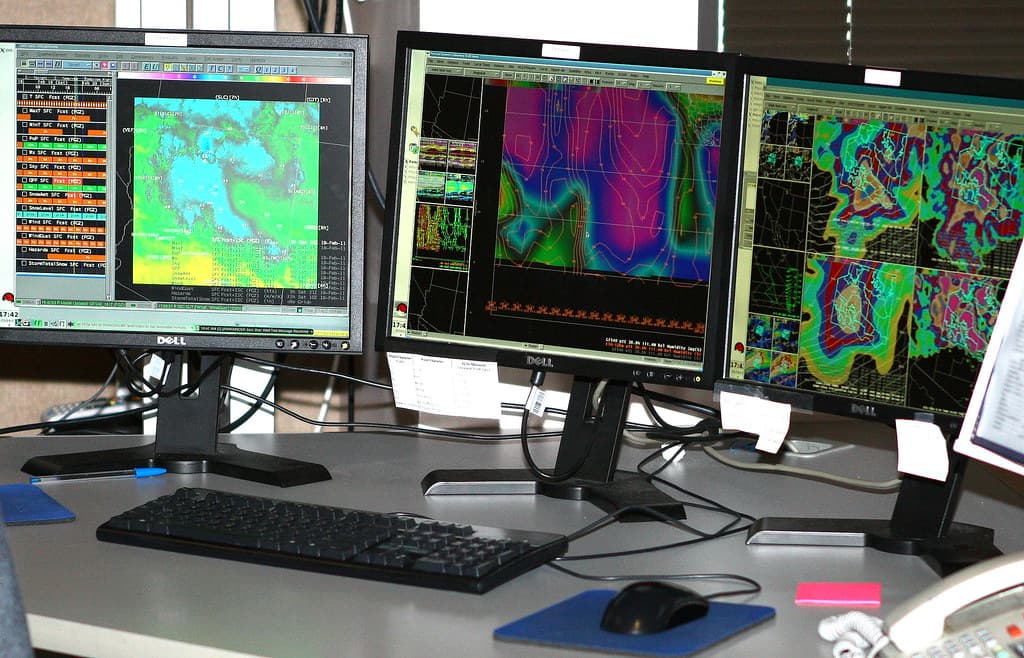
Bremen braces for heat, storms and a climate growing harder to predict
As northern Germany braces for another two-day burst of heat, Bremen faces thunderstorms, a 37.3-degree June record and a climate pattern that is testing farmers, festivals and forecasters alike.

The German Weather Service (DWD) forecast hot, humid conditions for Bremen with thunderstorm warnings late in the evening, followed by a complete change in the weather. Bremen has recorded a June high of 37.3 degrees Celsius, and northern Germany faces further two-day heat bursts.
Northern Germany is facing another burst of very hot weather, with a report published on 27 July 2026 warning of two days of intense heat, and a follow-up report on 31 July 2026 describing how conditions across the country would develop after a spell of heat and thunderstorms. In Bremen, a DWD meteorologist forecast hot and humid weather for Tuesday, with renewed thunderstorm warnings late in the evening, according to German media reports. Bremen, a port city of roughly 586,000 people, is Germany's eleventh-largest city and the second-largest in the north after Hamburg. Together with Bremerhaven it forms the two-city state of the Free Hanseatic City of Bremen. The city sits in a part of the country that has swung between extremes in recent years, from black ice and school closures in winter to record summer heat. The stakes go beyond comfort. The German Weather Service recorded 37.3 degrees Celsius in Bremen, the city's highest June temperature on preliminary data, and Germany's warmest years on record were 2018 and 2022. Farmers nationwide are already adapting to heat, drought, heavy rain and late frost.
Heat returns to Bremen as forecasters warn of storms
Northern Germany is facing another burst of very hot weather. A report published on 27 July 2026 said the region, which includes Bremen, would experience very hot conditions again for two days. A second report, published on 31 July 2026, examined how the weather across Germany was set to develop following the period of heat and thunderstorms.
For Bremen itself, a meteorologist from the German Weather Service (DWD) forecast hot and humid conditions for Tuesday, according to regional reporting, with renewed warnings of thunderstorms arriving late in the evening. The same reporting suggests the weather situation in the Bremen area is expected to change completely soon after Tuesday.
The national picture is similarly unsettled. According to the DWD, an official heat warning was issued for large parts of Germany, affecting mainly central and southern regions, with a localised risk of severe weather. It is unclear whether Bremen fell within the warning area, since the warning focused on regions further south. Across the country, Tuesday was forecast to bring a mix of sun and clouds, with longer sunny periods especially in the southeast and regional showers and thunderstorms carrying severe weather potential.
For Bremen, the heat was not expected to last. Reporting indicates that after a period of sunshine, thunderstorms and showers moved into Lower Saxony and Bremen on Tuesday, according to the DWD. Around midweek, a northwesterly wind brought stormy gusts and showers to the North Sea coast, affecting the weather in Lower Saxony and Bremen.
The forecast in numbers: 38-degree peaks and stormy nights
The German Weather Service forecast a broad spread of temperatures for Tuesday, with highs across Germany expected to reach between 24 and 38 degrees, according to reports citing the DWD. The day was set to bring a mix of sun and clouds, with longer sunny periods in the southeast, while regional showers and thunderstorms carried the potential for severe weather, the reports said.
The DWD also issued an official heat warning covering large parts of the country, though according to the reports it applied mainly to central and southern regions, where the risk of localized severe weather was greatest. It was not clear from the reports whether Bremen fell within the warning area.
The nights offered some relief. Following the heat, strong thunderstorms and storm gusts were expected in parts of Germany, with isolated thunderstorms and rain possible overnight into Saturday, the reports said. Temperatures were forecast to fall to between 11 and 15 degrees during those hours.
By the weekend, conditions were expected to turn friendlier, with a mix of sun and clouds forecast across the country, according to the reports. All of these figures come from DWD forecasts as relayed by German media outlets; they represent projections at the time of publication rather than confirmed outcomes.
A 37.3-degree record and a warming pattern
Bremen has already felt what rising heat can mean for a northern German city. According to reports citing the German Weather Service (DWD), the service recorded a temperature of 37.3 degrees Celsius in Bremen, the highest June temperature measured there to date, based on preliminary data. The date of that reading has not been specified, and the figure remains provisional, but it stands as a marker of how far the city's summers have shifted.
The record fits a broader national pattern. The warmest years on record in Germany were 2018 and 2022, and the trend since has continued to test cities across the country, Bremen among them.
That matters here because of what Bremen is. The city is the capital of the Free Hanseatic City of Bremen, a two-city state it shares with Bremerhaven, and a port city with roughly 586,000 inhabitants. That makes it the eleventh-largest city in Germany and the second-largest in the north after Hamburg. A heat record in such a densely settled urban and industrial centre is not an abstraction: it bears on hundreds of thousands of residents, on port operations along the Weser, and on infrastructure built for a milder maritime climate. The 37.3-degree reading, if confirmed, gives Bremen a concrete reference point for how quickly conditions are changing.
From black ice to heatwaves: Bremen's weather extremes
Bremen's climate delivers its sharpest blows at opposite ends of the calendar. In winter, the city has been brought to a near standstill. According to reports, snow and icy conditions forced school closures in Bremen, Hesse and Lower Saxony, while black ice affected particularly the north and east of the country. No dates were given for the episode, but the disruption fits a pattern of winter weather repeatedly testing the region.
The North Sea shapes much of what reaches the city. Reports describe a northwesterly wind driving stormy gusts and showers off the coast into Lower Saxony and Bremen around midweek, a reminder of how exposed the port city sits to Atlantic systems. Even quieter spells carry uncertainty: forecasters have warned of unstable Sundays in Lower Saxony and Bremen with possible local rain, advising residents to carry umbrellas.
Set against the summer picture, the contrast is stark. The same city that closes schools for ice has recorded a June peak of 37.3 degrees Celsius, according to preliminary DWD data, and has faced forecasts of hot, humid air with evening thunderstorm warnings. Between frozen winters and heatwave summers, Bremen's roughly 586,000 inhabitants inhabit a climate that swings hard in both directions — and, according to the reporting, one that is becoming harder to read.
Farmers adapt as extremes test Germany's food supply
German farmers are contending with a growing list of weather extremes. Heat, drought, heavy rainfall and late frost are all affecting their operations, sometimes within the same growing season. The pattern matters beyond individual farms: it speaks to how the country's food production holds up as conditions become less predictable.
Farmers are not simply absorbing the losses. They are responding with adapted crop varieties better suited to the new conditions, and in some cases switching to entirely new crops. Modern breeding methods are being used to develop plants that can cope with stress, and cultivation practices are being changed to match shifting seasons and rainfall patterns.
The national picture sits within a wider global one. The wars in Ukraine and the Middle East have so far not halted the global food supply, despite the pressure both conflicts have placed on grain production and trade routes. That resilience, however, has its limits. A weather phenomenon such as El Niño could significantly increase the risks to the global food supply, adding climate shocks on top of geopolitical ones.
For Germany, the stakes are visible in the data. The warmest years on record in the country were 2018 and 2022, both marked by the kind of heat and drought that now drives farmers' adaptation efforts. What growers in regions like Bremen and Lower Saxony are doing today — new varieties, new methods, new habits — is increasingly a preview of how agriculture across the country will have to operate.
When storms threaten the party: Breminale and the weather
Weather risk is not only a matter for farmers and forecasters in Bremen; it shapes the city's public life too. According to reports, the Breminale 2024 festival opened in Bremen as a free event drawing thousands of visitors to the city. The exact date of the 2024 edition is not given in the available reporting, only the year.
An open-air festival on that scale lives and dies by the forecast, and this one was no exception. Weather experts warned of possible thunderstorms during the event, according to the same reports — the kind of alert that can force organisers to weigh evacuations, stage closures and safety plans against the expectations of a crowd numbering in the thousands.
For a port city of roughly 586,000 people, where summer festivals anchor the cultural calendar, such warnings illustrate how exposed large public gatherings remain to sudden shifts in the weather.
What comes next for Bremen's weather
According to the German Weather Service, the weather situation in the Bremen area was expected to change completely soon after Tuesday, when hot and humid conditions and late-evening thunderstorm warnings had been forecast. Overnight into Saturday, temperatures were expected to fall to between 11 and 15 degrees, with isolated thunderstorms and rain still possible, the DWD said. A northwesterly wind was set to bring stormy gusts and showers to the North Sea coast around midweek, affecting Lower Saxony and Bremen. The weekend, forecasters said, should turn friendlier, with a mix of sun and clouds. What forecasters will watch next is whether that cooler, calmer pattern holds.
Breminale 2024 festival in Bremen
Report: northern Germany to experience very hot conditions again for two days
Report: how weather in Germany would develop after heat and thunderstorms
Frequently asked questions
What is the weather forecast for Bremen this week?
According to a DWD meteorologist, hot and humid conditions were forecast for the Bremen area on Tuesday, with renewed warnings of thunderstorms late in the evening. Reports also suggest the weather situation in Bremen would change completely soon after Tuesday, with a northwesterly wind bringing stormy gusts and showers to the North Sea coast around midweek.
What is the highest temperature ever recorded in Bremen?
According to the German Weather Service, a temperature of 37.3 degrees Celsius was recorded in Bremen, the highest June temperature measured there to date, based on preliminary data. The exact date and year of this record were not specified. More broadly, the warmest years on record in Germany were 2018 and 2022.
Is there a heat warning in Germany right now?
The German Weather Service issued an official heat warning for large parts of Germany, affecting mainly central and southern regions, with localized severe weather risk, according to reports. It is unclear whether Bremen was included in the warning area. A report from 27 July 2026 stated northern Germany would experience very hot conditions again for two days.
How is extreme weather affecting farmers in Germany?
German farmers are being affected by heat, drought, heavy rainfall and late frost. In response, they are turning to adapted crop varieties, new crops, modern breeding methods and changed cultivation practices. The wars in Ukraine and the Middle East have so far not halted the global food supply, but a phenomenon such as El Niño could significantly increase risks to it.
How big is Bremen and where does it rank among German cities?
Bremen is a port city with roughly 586,000 inhabitants, making it the eleventh-largest city in Germany and the second-largest in northern Germany after Hamburg. It is the capital of the Free Hanseatic City of Bremen, a two-city state comprising the cities of Bremen and Bremerhaven.