General Christopher LaNeve's Nomination for Army Chief of Staff Faces Senate Opposition
President Donald Trump selected General Christopher LaNeve to lead the U.S. Army permanently, but bipartisan Senate concerns over his qualifications have placed his confirmation in jeopardy.
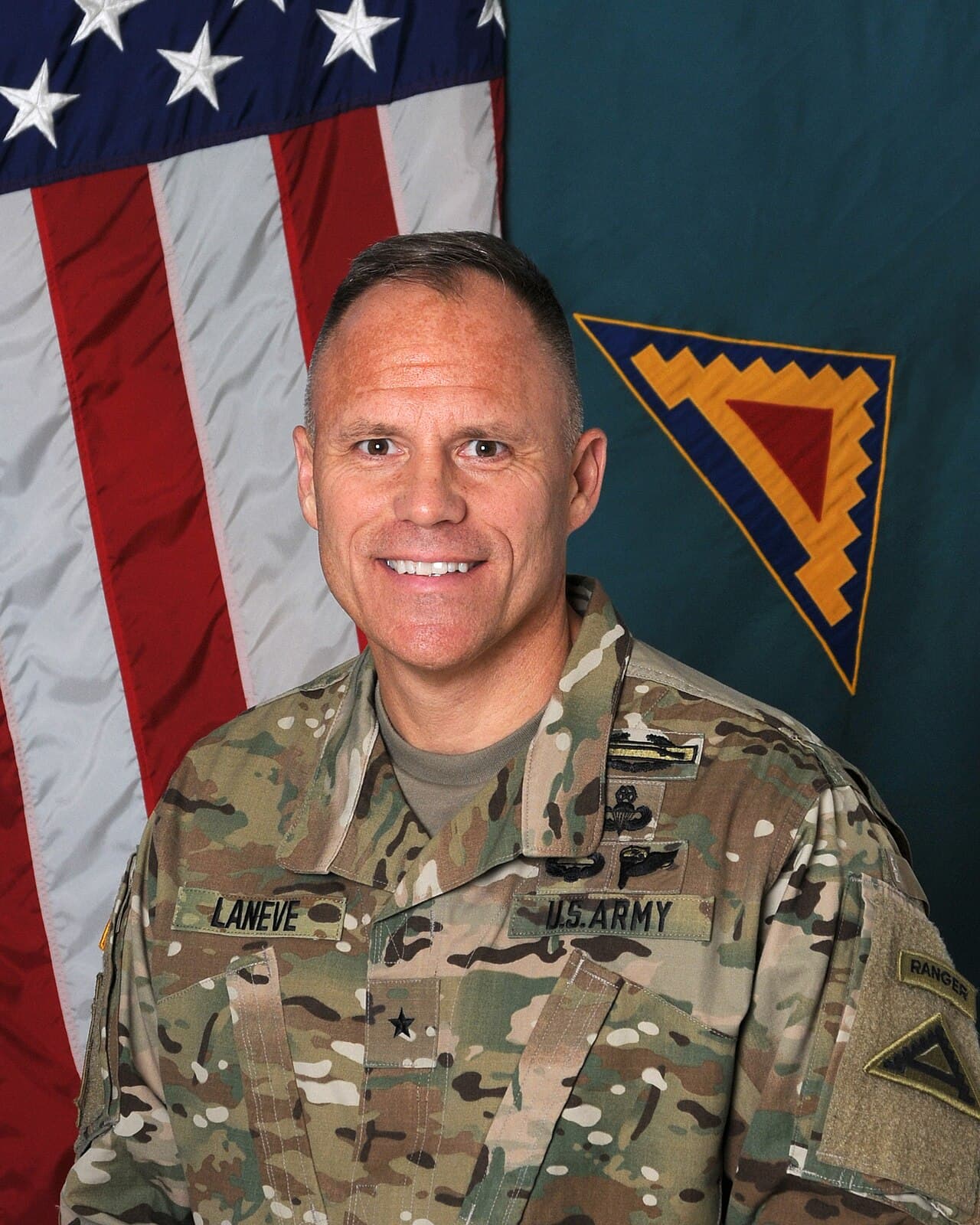
General Christopher LaNeve was nominated by President Trump to permanently lead the U.S. Army after serving as acting chief of staff since April 2026. His confirmation faces opposition from Republican and Democratic senators who question his qualifications for the role, putting his permanent appointment in jeopardy.
General Christopher LaNeve was tapped as Army chief of staff on a permanent basis in 2026. He rose through the ranks to become the service’s second-most senior officer, serving as vice chief of staff since February 2026 after a stint as Senior Military Assistant to Defense Secretary Pete Hegseth. His nomination now faces resistance from Republican senators who question his qualifications, putting his confirmation at risk amid broader upheaval in the military leadership under President Trump’s reshaping of the armed forces.
LaNeve's rise to the Army's second-highest post
General Christopher LaNeve served as Senior Military Assistant to Defense Secretary Pete Hegseth from 2025 to 2026, placing him at the center of Pentagon decision‑making. Hegseth subsequently nominated LaNeve to become the 40th vice chief of staff of the United States Army, a role he assumed on 6 February 2026. In that capacity he became the service’s second‑most senior officer, directly overseeing daily operations and advising on strategic matters.
Before entering the Pentagon, LaNeve had risen through the ranks to command the Eighth Army, a position that broadened his operational experience across the Indo‑Pacific theater. His promotion to vice chief of staff marked the culmination of a career defined by close coordination with senior civilian leaders and a reputation for disciplined management of resources.
The nomination came as President Donald Trump was reshaping the military’s senior leadership, firing much of the existing top brass and installing loyalists in key posts. Hegseth’s selection of LaNeve was intended to cement continuity within the Army’s highest echelons while signaling alignment with the administration’s broader restructuring agenda.
However, Republican senators have voiced reservations about LaNeve’s readiness for the permanent post, citing perceived gaps in four‑star experience and questioning whether his ascent reflected merit or political loyalty. These objections have placed his confirmation in jeopardy, underscoring the tension between loyalty‑driven appointments and traditional military vetting standards. The outcome will shape the Army’s immediate leadership trajectory and influence policy direction amid a period of rapid institutional change.
LaNeve served as Senior Military Assistant to Secretary of Defense Pete Hegseth.
LaNeve became the 40th vice chief of staff of the United States Army, the service's second-most senior officer.
LaNeve became acting chief of staff of the Army following the ouster of his predecessor.
Top Army brass and civilian leadership gathered in Conmy Hall at Fort Myer in Arlington for a retirement ceremony on a Friday.
Hegseth selected LaNeve as his pick for Army chief of staff on a permanent basis, but senators in both parties raised objections that put his confirmation at risk.
Acting chief of staff amid leadership upheaval
Following the removal of his predecessor in early April 2026, LaNeve was appointed acting chief of staff of the Army on 2 April 2026. The transition occurred during a period of sweeping personnel changes across the military, driven by President Trump's efforts to replace senior officers with loyalists. LaNeve, then 59 years old, temporarily held the service's highest operational role while his own qualifications for the permanent post remained under scrutiny.
LaNeve previously served as Senior Military Assistant to Secretary of Defense Pete Hegseth from 2025 to 2026. Hegseth selected him for the top uniformed Army position after LaNeve rose to become the Army's second-most senior officer, assuming the role of 40th vice chief of staff of the United States Army on 6 February 2026. His appointment as acting chief of staff followed the ouster of his predecessor, though the circumstances of that removal are not detailed here.
Republican senators have expressed concerns about LaNeve's suitability for the permanent role, with some lawmakers and experts questioning his experience at the four-star level. Objections from senators in both parties have put his confirmation at risk, potentially blocking his elevation from acting to confirmed chief of staff. The situation reflects broader tensions within the Senate over Trump's reshaping of military leadership.
A retirement ceremony held in late April 2026 at Conmy Hall at Fort Myer in Arlington brought together top Army brass and civilian leadership, marking a symbolic moment amid the upheaval. The ceremony occurred in the same month LaNeve assumed the acting chief of staff role, underscoring the convergence of institutional transition and political controversy. His path to the permanent position now depends on navigating Senate opposition while leading the Army during a period of rapid change.
Senate opposition emerges over qualifications
Senate opposition emerges over qualifications Republican senators have voiced reservations about Christopher LaNeve’s suitability for the permanent post of Army chief of staff. Several members of the Armed Services Committee and other lawmakers have questioned whether his career reflects the breadth of experience typically expected of a four-star general. Critics point to his limited command of a major combat unit before rising to the service’s upper ranks, suggesting this may leave gaps in operational judgment.
Defense analysts aligned with congressional oversight circles have echoed those concerns, noting that LaNeve’s record lacks the sustained leadership of large-scale formations that prior chiefs have held. Some observers argue that such gaps could affect decision-making in high-stakes strategic environments.
Democratic senators have joined the dissent, though their objections are rooted less in ideological opposition and more in institutional caution. Multiple sources indicate that a coalition of legislators from both parties is coalescing around the view that the nomination requires more rigorous scrutiny before advancing.
No formal vote has been scheduled, but several outlets report that sufficient opposition has emerged to jeopardize LaNeve’s confirmation process. The White House has yet to publicly address the growing resistance, though the administration has emphasized the importance of stable leadership as it reshapes the upper echelons of the military.
The situation underscores a broader tension between loyalty-driven appointments and traditional merit-based expectations within the officer corps. As senators prepare for what may become a high-profile hearing, the fate of LaNeve’s nomination remains uncertain, with implications for the direction of Army policy and civilian-military coordination moving forward.
Political context and broader military reshaping
General Christopher LaNeve’s nomination to serve permanently as Army chief of staff unfolds against a backdrop of sweeping turnover at the highest levels of the Pentagon. President Trump has removed numerous senior military leaders, installing appointees perceived as ideologically aligned with his administration. This reshaping has intensified scrutiny of each new appointment, particularly those viewed as lacking conventional military experience.
LaNeve’s path to the role reflects this broader shift. He served as senior military assistant to Defense Secretary Pete Hegseth from 2025 to 2026, later becoming the 40th vice chief of staff of the United States Army on 6 February 2026. Following the abrupt removal of his predecessor, he assumed the role of acting chief of staff on 2 April 2026. His selection as Hegseth’s permanent choice was announced amid this churn, but his confirmation now faces resistance in the Senate.
Some Republican lawmakers have expressed reservations about LaNeve’s qualifications, particularly his limited experience at the four-star level. Critics question whether his ascent, while rapid, reflects merit or alignment with political priorities. The concerns are not confined to one party, with bipartisan hesitation adding pressure on the nomination.
The nomination comes as the Army navigates leadership uncertainty. LaNeve, aged 59, has held key positions including commanding general of the Eighth Army and senior roles within the Department of Defense. His current tenure as acting chief places him at the helm during a period of institutional realignment. The Senate’s evaluation of his record will determine whether he transitions from acting to permanent leadership in a force undergoing both structural and cultural transformation.
Reactions from military and civilian leadership
Senior Army officers and civilian leaders gathered in Conmy Hall at Fort Myer in late April 2026 for a retirement ceremony honoring departing officers. The event included Christopher LaNeve, then serving as acting Army chief of staff, and other senior figures. Observers noted the gathering as a visible sign of institutional continuity during a period of rapid turnover in the service’s top ranks. The ceremony took place amid broader changes to the Army’s leadership structure, with multiple senior positions filled on an interim basis. Senior uniformed officers present emphasized the importance of maintaining operational readiness despite the ongoing transitions. Civilian leaders in attendance underscored the need for stable leadership as the Army navigated shifting strategic priorities. The gathering also featured remarks from officials highlighting the service’s commitment to tradition and professionalism. While the ceremony marked a moment of reflection, it occurred against a backdrop of uncertainty regarding the future of key leadership roles. Some attendees expressed concern over the pace of change at the highest levels of the Army. Others noted the significance of maintaining established protocols even as new appointments were made. The event drew participation from multiple senior civilian officials within the Department of Defense. Its occurrence in late April 2026 placed it at the center of a turbulent period of leadership realignment. Attendees represented a cross-section of Army leadership, including those who had served alongside LaNeve in prior roles. The ceremony thus served as both a tribute and a moment of reflection on the evolving structure of Army command.
Implications for Army leadership and policy direction
Implications for Army leadership and policy direction If LaNeve fails to secure confirmation, the Army will endure an extended period without a confirmed chief of staff, forcing reliance on interim leadership that lacks full authority. This vacuum could stall long‑term strategic planning, delay critical modernization initiatives, and weaken operational readiness during a time of heightened geopolitical tension. The uncertainty also amplifies questions about the trajectory of Trump’s broader effort to reshape the military’s command structure, particularly the emphasis on appointing loyalists over traditional career officers.
The episode will set a precedent for future nominees, who may face intensified scrutiny from senators seeking to assess fitness for the role. Lawmakers in both parties are likely to demand clearer evidence of four‑star experience and policy alignment before advancing any candidate. Consequently, the confirmation process may become more politicized, with greater weight given to partisan concerns than to institutional continuity.
Moreover, the potential departure of LaNeve underscores the fragility of leadership transitions when external pressures override professional consensus. The Army may need to recalibrate its succession mechanisms to ensure seamless hand‑offs even amid partisan deadlock. In the longer term, the outcome could influence how aggressively future administrations pursue rapid turnover at the highest echelons of the armed forces, shaping both the culture and effectiveness of military leadership.
Frequently asked questions
Who is Christopher LaNeve and what role did Pete Hegseth appoint him to?
Christopher LaNeve is a U.S. Army general who served as Senior Military Assistant to Secretary of Defense Pete Hegseth from 2025 to 2026. Hegseth selected him to become the Army's chief of staff, first on a permanent basis and later as acting chief after his predecessor was ousted.
When did LaNeve become acting chief of staff of the U.S. Army?
LaNeve became acting chief of staff of the U.S. Army on 2 April 2026, following the removal of his predecessor.
Why are some Republican senators opposing LaNeve's nomination?
Some Republican senators have expressed concerns about LaNeve's qualifications for the role, questioning his experience at the four-star level. Their objections have put his confirmation at risk, though the briefing does not specify which senators or their exact reasons.
What position did LaNeve hold before becoming acting chief of staff?
Before becoming acting chief of staff, LaNeve served as the 40th vice chief of staff of the United States Army, the service's second-most senior officer, a role he assumed on 6 February 2026.
Was LaNeve previously involved with Pete Hegseth?
Yes, LaNeve previously served as Senior Military Assistant to Secretary of Defense Pete Hegseth during 2025 and 2026, a role that preceded Hegseth's selection of him for top Army leadership positions.