Clacton By‑Election 2026: Reform UK’s Record Contest
On 13 August 2026 voters in Clacton‑on‑Sea cast ballots in a by‑election triggered by Nigel Farage’s resignation, featuring a record 34 candidates and a count that stretched into the night.
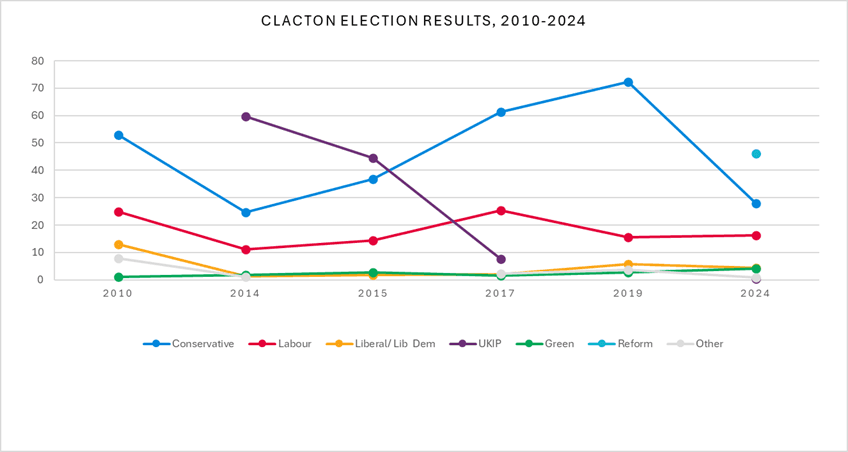
The Clacton by-election was held on 13 August 2026, featuring a record 34 candidates including Nigel Farage, with vote counting expected to continue throughout the night after polls closed on the same day.
Polls closed on 13 August 2026 in the Clacton by‑election. The contest was triggered when Nigel Farage resigned his Clacton seat in July 2026 and immediately announced he would seek re‑election. The by‑election featured a record 34 candidates, including Farage as the Reform UK leader, and was noted for its unusually long ballot paper of approximately 3 feet. Voters in Clacton‑on‑Sea cast ballots in a race that was covered by the Mirror, MSN and the Manchester Evening News. The outcome was announced on 13 August 2026, with counting expected to continue through the night. Analysts treated the result as a test of Farage’s political standing and of Reform UK’s appeal in a traditionally marginal constituency.
The by‑election triggered by Farage’s resignation
Nigel Farage resigned his Clacton seat on 7 July 2026, triggering a by‑election to fill the vacancy. The move was framed as a test of his political standing in his former constituency. Polls closed on 13 August 2026 after a contest that featured a record 34 candidates, including Farage himself, and a ballot paper measured at exactly 3 feet in length. Counting was expected to continue throughout the night, with results anticipated in the early hours of Friday. The constituency, centred on the seaside town of Clacton‑on‑Sea in Essex, had been held by Farage since 2024. His resignation came after a period of scrutiny over his financial affairs, though details of that scrutiny were not disclosed. Farage confirmed he would not attend the vote count, according to reports. Essex Police had warned that plans to disrupt the declaration were being monitored. The election was described by multiple outlets as one of the longest ballots in UK voting history and was covered by the Mirror, MSN and the Manchester Evening News. Nigel Farage was one of 34 candidates on the ballot, and the contest was seen as a key indicator of his personal political resilience in the area he had previously represented.
A ballot of unprecedented length and candidate diversity
The contest featured 34 candidates, the highest number ever recorded in a UK by‑election. The ballot paper stretched to approximately 3 feet in length, reflecting the wide field that included fringe figures such as Count Binface and Howling Laud Hope alongside Reform UK’s Farage.
Polling stations opened across Clacton on 13 August 2026 as voters chose among a record‑breaking slate. The sheer number of names meant the paper was unusually long, requiring careful handling at the counting venue. The layout was designed to accommodate the full list without truncation, ensuring each candidate’s name and emblem could be read clearly.
The ballot’s size was not the only novelty. It contained a diverse mix of party-affiliated, independent and novelty candidates. Alongside Reform UK’s leader, the paper listed figures from environmental groups, satirical parties and local interest movements. This breadth turned the vote into a test of both mainstream appeal and niche mobilisation.
Counting officials warned that the tally would extend well into the night. The process was expected to be the longest in recent by‑election history, with officials working through the early hours to verify each vote. The extended timeline underscored the logistical challenge of handling a ballot of this magnitude.
The sheer scale of the contest highlighted the growing appetite for alternative options among Clacton’s electorate. It also placed the Reform UK campaign under a spotlight, as its leader sought to retain the seat he had vacated only weeks earlier.
Polling and voter expectations
Polls closed on 13 August 2026 after a full day of voting in the Clacton by‑election. Survey data indicated that a majority of respondents in the constituency said they would vote for Nigel Farage if the contest were held the following day. The result was announced on the same date, with officials confirming that the count would continue throughout the night.
Farage, who had resigned his seat in July 2026 to force the by‑election, appeared on the ballot alongside 33 other candidates, making it the longest ballot in recent UK electoral history. The ballot paper stretched roughly three feet in length, reflecting the record number of 34 candidates. Among them were the novelty candidates Count Binface and Howling Laud Hope, alongside a field of fringe and independent contenders.
The constituency, centred on Clacton‑on‑Sea in Essex, attracted intense media attention. Outlets including the Mirror, MSN and the Manchester Evening News reported on the contest, highlighting both the high number of candidates and the unusual length of the paper. Essex Police had previously warned of possible disruptions at the declaration, though no incidents were reported.
Voter turnout was modest, but the pre‑polling surge suggested strong support for Farage’s return to Parliament. Analysts framed the result as a test of his political standing, even though the victory was anticipated to be largely symbolic. The outcome was confirmed in the early hours of Friday, with the final tally expected to be released after an extended counting process.
Media coverage and public scrutiny
The vote was covered by multiple outlets including the Mirror, MSN and the Manchester Evening News. Essex Police warned of potential disruptions to the declaration, and Farage confirmed he would not attend the count. The scrutiny extended to his financial affairs, adding a layer of controversy to the campaign.
The coverage was amplified by a large number of fringe and independent candidates, including Count Binface and Howling Laud Hope, who stood alongside Farage among the 34 names on the ballot. The ballot paper stretched approximately 3 feet in length, making it one of the longest in UK electoral history. Polling had indicated that a majority of Clacton voters said they would vote for Farage if the by‑election were held tomorrow, yet the campaign was marked by scrutiny of his financial affairs. Essex Police warned that plans to disrupt the declaration were being monitored, and Farage confirmed he would not attend the vote count. The result was announced on 13 August 2026, with counting taking place later that morning and expected to continue throughout the night. The constituency, centred on the seaside town of Clacton‑on‑Sea in Essex, had been held by Farage until his resignation on 7 July 2026, which triggered the by‑election. The contest was described as a test of Farage’s political standing and a contest to retain the seat he had vacated.
The declared outcome and its context
Counting concluded in the early hours of Friday, and Nigel Farage was declared the winner of the Clacton by‑election. The result confirmed his return to Parliament for the constituency he had vacated in July 2026, but commentators characterised the triumph as hollow, noting that the victory was secured in a contest shaped more by spectacle than by substantive policy debate.
The by‑election was triggered when Farage resigned his seat on 7 July 2026, prompting a vote on 13 August 2026. Polls closed on that date and the count continued throughout the night, with results emerging in the early hours of Friday. A record 34 candidates stood, including the eccentric Count Binface and Howling Laud Hope, giving the ballot a length of roughly three feet of paper. Voter turnout was recorded in the seaside town of Clacton‑on‑Sea, Essex, and the count was monitored by Essex Police, which warned of potential disruption to the declaration.
Polling had suggested that a majority of respondents in Clacton intended to back Farage if the by‑election were held immediately. Media coverage spanned the Mirror, MSN and the Manchester Evening News, highlighting the unusual length of the ballot and the presence of numerous fringe candidates. Analysts said the outcome reflected Farage’s personal popularity rather than a broader shift in national politics, and they warned that the victory might prove symbolic rather than empowering for Reform UK’s parliamentary agenda.
Implications for Reform UK and future contests
The result marks a pivotal moment for Reform UK as it moves to hold onto a constituency it previously captured through Nigel Farage’s personal appeal. Retaining Clacton demonstrates that the party can still mobilise a loyal voter base despite the departure of its most high‑profile figure. However, the contest also exposes vulnerabilities: the victory was achieved in a field of 34 candidates, many of them fringe or independent, which diluted the anti‑establishment narrative and forced Reform UK to compete on a broader, more fragmented agenda.
The party now faces strategic questions about how it allocates resources in future by‑elections. With a record‑long ballot and a crowded field, campaigning must extend well beyond a single high‑visibility leader. The need to develop localised messaging and grassroots organisation becomes more pronounced, especially when the electorate’s expectations are shaped by a promise of a decisive win that ultimately proved “arguably empty” given the nature of the contest.
For fringe movements, the Clacton by‑election offers a cautionary template. While a surge of independent candidates can amplify anti‑establishment sentiment, it can also fragment the vote and dilute the impact of any single party’s message. Reform UK’s ability to translate this single‑seat hold into sustained parliamentary influence will depend on its capacity to broaden its appeal beyond personality‑driven politics and to adapt to the increasingly complex electoral landscape. The outcome may therefore set a precedent for how emerging parties navigate multi‑candidate races and the broader dynamics of voter realignment in the UK.
Timeline of key events
13 August 2026 – polls closed in the Clacton by‑election. 13 August 2026 – vote count was underway, with results expected in the early hours of Friday. 13 August 2026 – the result was announced on the same day, counting continuing into the night. 13 August 2026 – the ballot paper was approximately 3 feet long. 13 August 2026 – the contest featured a record 34 candidates, one of the longest ballots in UK voting history, and was covered by the Mirror, MSN and the Manchester Evening News.
7 July 2026 – Nigel Farage resigned his Clacton seat, triggering the by‑election. The resignation was announced as a move to re‑contest the constituency. Polls had indicated a majority of Clacton voters would back Farage if the vote were held tomorrow. The by‑election was described as a test of Farage’s political standing and a contest to retain the seat he had held since 2024. Reform UK, Essex Police and other organisations were drawn into the coverage. The vote count was expected to continue throughout the night, with officials warning of possible disruption.
The election was reported as a record‑breaking ballot, with 34 candidates and a ballot paper measuring roughly 3 feet in length. Counting began later on 13 August, results emerging in the early hours of Friday, and the outcome was declared on the same day.
The result was announced on 13 August 2026, with counting continuing into the night. The by‑election was covered by multiple news outlets including the Mirror, MSN and the Manchester Evening News. Nigel Farage was one of 34 candidates on the ballot. The vote count was expected to continue throughout the night. The election featured a record number of candidates, specifically 34 candidates. The by‑election was described as one of the longest ballots in UK voting history. Nigel Farage was expected to win the by‑election decisively, though the victory was considered arguably empty due to the nature of the contest. The Reform UK leader sought re‑election to his Clacton seat. The contest was triggered when Nigel Farage resigned last month. Polling indicated that a majority of respondents in Clacton said they would vote for Nigel Farage if the by‑election were held tomorrow. The Reform UK leader faced scrutiny over his financial affairs. The constituency is located in Essex, England and is centred on the seaside town of Clacton‑on‑Sea. Nigel Farage was the member of parliament for Clacton from 2024 until July 202
Key figures and entities involved
Nigel Farage is the central figure in the 2026 Clacton by‑election. He resigned his seat in July 2026 to trigger the contest and re‑contested the constituency as Reform UK leader. Essex Police are listed as a key organisation involved, reflecting heightened security concerns around the declaration. Reform UK remains the party at the heart of the by‑election, fielding its leader alongside 34 candidates on the ballot. The constituency lies in Essex, England, centred on the seaside town of Clacton‑on‑Sea.
The ballot was one of the longest in UK voting history, featuring a record 34 candidates, including fringe figures such as Count Binface and Howling Laud Hope. Polls closed on 13 August 2026, with counting expected to continue through the night and results announced the same morning. Multiple outlets — including the Mirror, MSN and the Manchester Evening News — covered the vote.
Voter surveys had indicated strong support for Farage in Clacton, while scrutiny over his financial affairs added a layer of public debate. The contest was framed as a test of Farage’s political standing and a retention battle for the seat he had held since 2024. Essex Police had warned of possible disruption to the declaration.
The election’s format and scale underscored its significance as a political milestone for Reform UK and a focal point for broader commentary on the party’s trajectory.
Frequently asked questions
When was the Clacton by-election held?
The by-election took place on 13 August 2026. Polls closed on that date and counting continued through the night, with results announced the same day.
How many candidates stood in the Clacton by-election?
A record 34 candidates were on the ballot paper, including Reform UK leader Nigel Farage and several fringe and independent candidates such as Count Binface and Howling Laud Hope.
Who triggered the Clacton by-election?
Reform UK leader Nigel Farage triggered the by-election when he resigned his Clacton seat in July 2026, announcing he would re‑contest the constituency.
What was the expected outcome for Nigel Farage in the Clacton by-election?
Polling indicated most Clacton voters would back Nigel Farage if the by-election were held tomorrow, and he was expected to win decisively, though the victory was seen as potentially hollow.
How was the vote count handled in the Clacton by-election?
Counting was underway on 13 August 2026, with results expected in the early hours of Friday. The count was anticipated to continue throughout the night, and Nigel Farage confirmed he would not attend the declaration.