Owen Ansah's anti-doping case casts shadow over German sprint triumph
Owen Ansah won gold in the men's 200 metres at the 2026 European Athletics Championships but now faces a potential ban after a missed doping test.
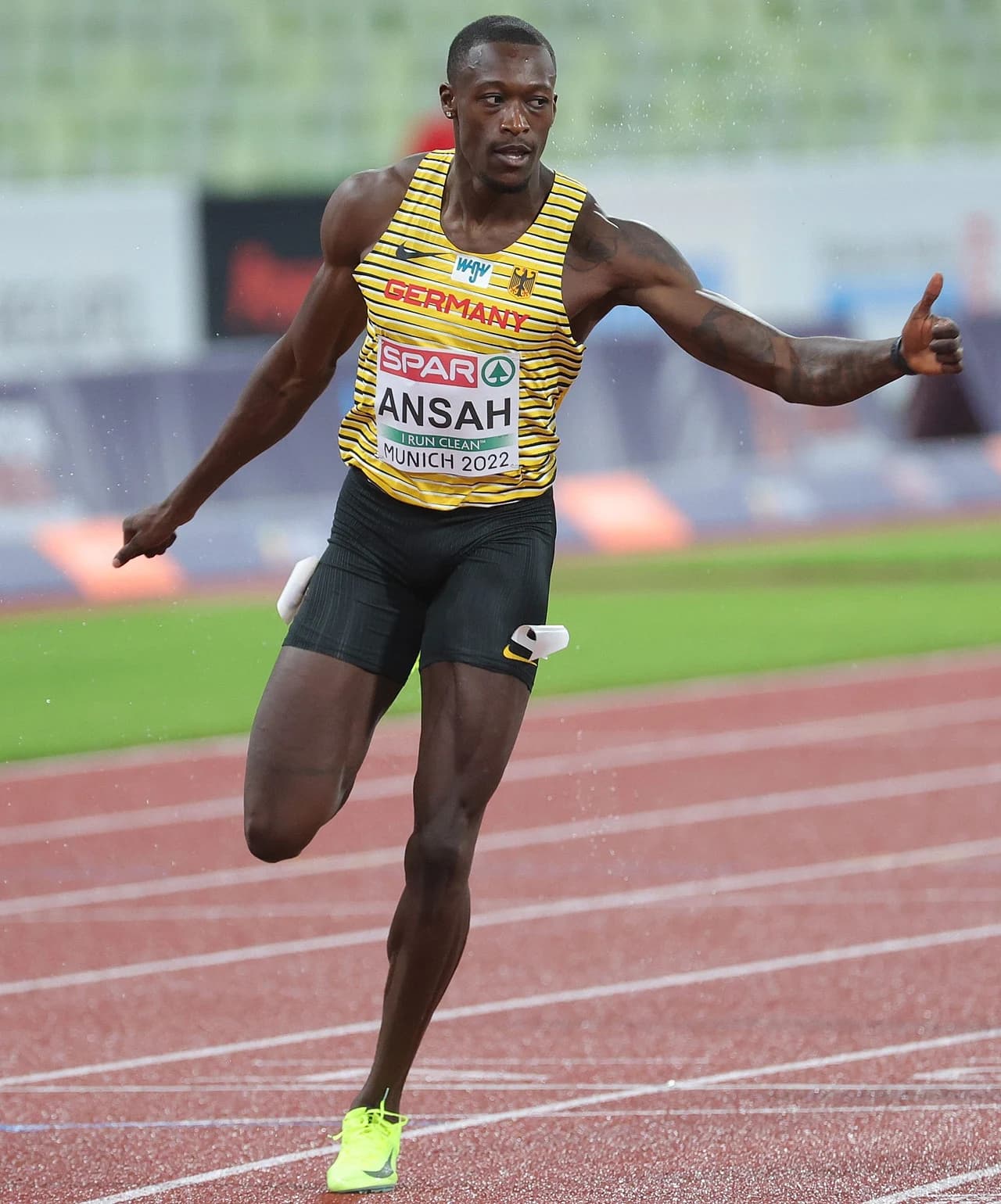
Owen Ansah won the men's 200 metres gold medal at the 2026 European Athletics Championships with a time of 19.95 seconds, but his victory is now linked to a doping investigation by Germany's anti-doping agency over an alleged missed test; he has denied refusing testing and faces a potential ban, though the outcome of the case remains und決
Owen Ansah won the men’s 200 metres gold medal at the 2026 European Athletics Championships with a time of 19.95 seconds. He is a German sprinter who broke new ground for his country by becoming the first German athlete to run the 100 metres in under 10 seconds, achieving a 9.99‑second clocking at the German Championships in Braunschweig on 29 June 2024. Ansah also secured bronze in the 100 metres at the same Championships and added indoor national titles over 60 metres, as well as German titles in both 100 and 200 metres. The case has drawn attention because Germany’s anti‑doping agency has charged him with allegedly refusing to undergo a doping test, raising questions about compliance just as he celebrates historic performances. The controversy now sits at the centre of discussion about the future of his career and the broader implications for German sprinting.
Gold medal victory at the 2026 European Championships
Owen Ansah won the men's 200 metres gold medal at the 2026 European Athletics Championships in Birmingham with a time of 19.95 seconds. The final concluded on 16 August 2026, with Great Britain's Zharnel Hughes taking silver. Germany had never broken the 10-second barrier in the 100 metres until Ansah ran 9.99 at the German Championships in Braunschweig on 29 June 2024. He also secured bronze in the 100 metres and a national indoor title over 60 metres, and had previously won German titles in both 100 and 200 metres. The victory came amid a doping investigation by Germany’s anti-doping agency following an alleged missed test.
He denies refusing testing and faces a potential ban as the agency reviews the case. The investigation casts a shadow over what had been a historic breakthrough for German sprinting. The championships ran from 10 to 16 August 2026 at Alexander Stadium.
Anti-doping allegations and investigation
Germany’s anti‑doping agency has opened a case against Owen Ansah after allegations that he failed to submit to a required doping test. The agency says the sprinter’s participation in the 2026 European Championships, where he captured 200 m gold and a 100 m bronze, is now under review. Ansah himself denies refusing the test, insisting he complied with all testing protocols. The investigation remains unresolved, and the potential sanction he faces has not been disclosed. The matter casts a shadow over what has been celebrated as a historic breakthrough for German sprinting.
Historic performances and national significance
Owen Ansah became Germany’s fastest sprinter and first to break the 10‑second barrier when he ran 9.99 seconds at the German Championships in Braunschweig on 29 June 2024. He has won German national titles in both 100 and 200 metres, captured indoor gold in the 60 metres and helped Germany to bronze in the 4 × 100 relay at the 2024 European Championships. These performances signal a long‑awaited resurgence of German sprinting on the continental stage. The milestone was achieved ahead of his gold‑medal victory in the 200 m at the 2026 European Championships, where he clocked 19.95 seconds. His rise now unfolds against an ongoing anti‑doping investigation that has cast uncertainty over the team’s triumph.
Reactions and next steps
Athletics officials say they will wait for the outcome of Germany’s anti-doping probe before commenting further. Ansah’s case now hangs over his recent double gold at the 2026 European Championships. The sprinter who clocked 19.95 seconds in the 200 metres remains under investigation after allegedly missing a test. His 9.99 seconds run in June 2024 marked the first sub‑10 performance by a German. The investigation could determine whether he faces a ban that would affect his plans for the next season and upcoming global meets. Stakeholders say the final decision will set a precedent for how missed‑test allegations are handled in European athletics. They also note that the controversy has sparked debate about the balance between competitive ambition and regulatory compliance. As the process unfolds, the sport’s governing bodies stress they will act swiftly once the facts are clear. The timeline of his rise, from the Birmingham championships to the Braunschweig breakthrough, underscores the significance of his achievements amid the ongoing scrutiny.
Frequently asked questions
When did Owen Ansah run 100 metres under 10 seconds
Owen Ansah ran 100 metres in under 10 seconds at the German Championships in Braunschweig on 29 June 2024. He achieved a time of 9.99 seconds, becoming the first German sprinter to break the 10-second barrier.
What medals did Owen Ansah win at the 2026 European Championships
Owen Ansah won gold in the 200 metres with a time of 19.95 seconds and bronze in the 100 metres at the 2026 European Athletics Championships. He also secured a bronze medal in the men's 4 × 100 relay at the 2024 European Championships.
Why was Owen Ansah facing a doping investigation
Owen Ansah was charged by Germany’s anti-doping agency for allegedly refusing to undergo a doping test. The investigation examined whether he failed to comply with testing requirements, though he denies the allegation.
Who came second in the 200 metres final at the 2026 European Championships
Great Britain's Zharnel Hughes took the silver medal in the men's 200 metres final behind Owen Ansah at the 2026 European Athletics Championships.
What is Owen Ansah's nationality and background
Owen Ansah is a German sprinter with Ghanaian roots. He is Germany's fastest man and the first German to run the 100 metres in under 10 seconds, achieving 9.99 seconds at the 2024 German Championships in Braunschweig.