Frederik Ruppert claims historic gold in men's 3000 metres steeplechase at 2026 European Athletics EuropeanCh
Frederik Ruppert secured gold in the men's 3000 metres steeplechase at the 2026 European Athletics Championships in Birmingham, ending a 28-year German drought and marking a milestone for German long-distance running.
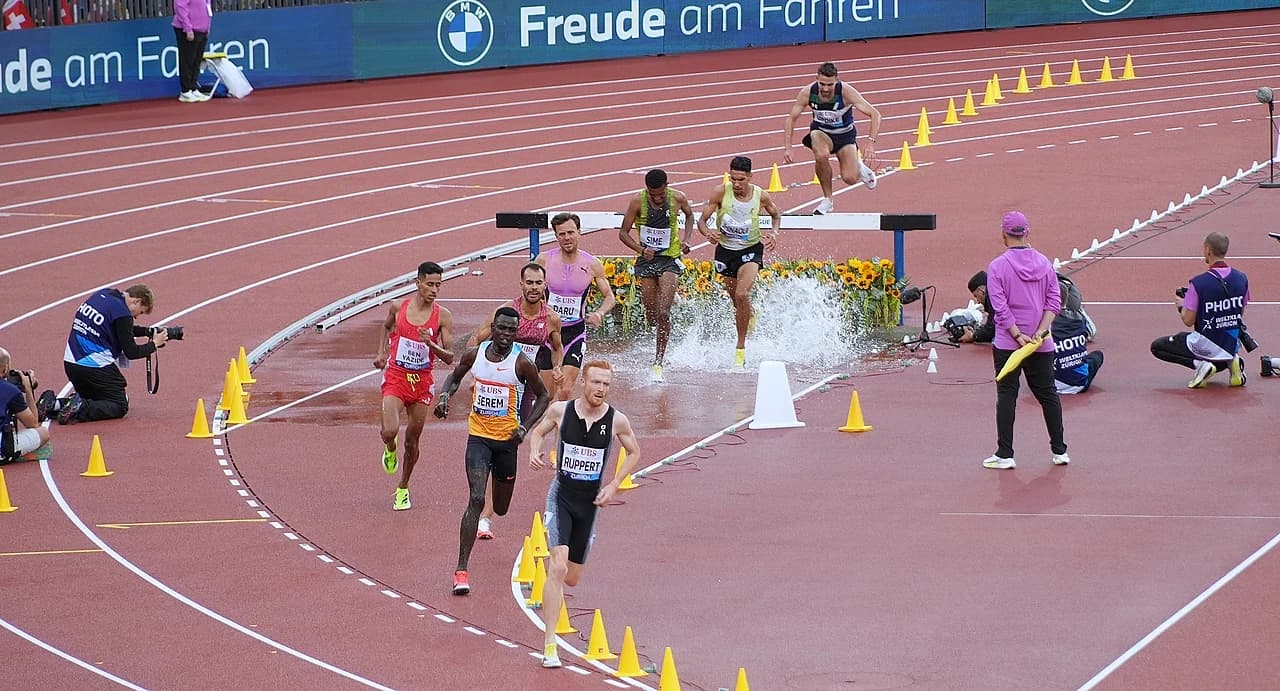
Frederik Ruppert won gold in the men's 3000 metres steeplechase at the 2026 European Athletics Championships in Birmingham, ending a 28-year German drought for European Championship gold in the event.
Frederik Ruppert won gold in the men’s 3000 metres steeplechase at the 2026 European Athletics Championships in Birmingham. He finished ahead of Luxembourg’s Ruben Querinjean, who took silver, while the German mixed sprint team claimed bronze in a separate event on the same day. Ruppert is a German specialist in the 3000 metres steeplechase. He had previously won the 2019 European U23 title, placed fourth at the 2024 Summer Olympics, and captured the national championship in 2024. The Birmingham race marked his first major senior title and ended a 28-year German drought for European Championship gold in the event. His preparation had included targeted training ahead of the championships. The victory is significant because it revives Germany’s presence in European distance events and underscores the effectiveness of focused preparation. Media coverage across kicker.de, welt.de, bild.de, rtl.de, and sportschau.de highlighted the result as historic for German athletics. Ruppert has indicated ambitions for the 2028 Olympics, though no timeline for future competitions has been confirmed.
Ruppert’s victory in Birmingham: a summary of the race and the result
Frederik Ruppert won gold in the men’s 3000 metres steeplechase at the 2026 European Athletics Championships in Birmingham. The final took place on 13 August 2026 at Alexander Stadium as part of a two‑round schedule. Ruppert crossed the line first, ending a 28‑year German drought for European Championship gold in the event. His victory was covered extensively across German media outlets including kicker.de, msn.com, welt.de, rtl.de, bild.de and sportschau.de.
Ruppert had prepared specifically for the title, having won the 2024 German Athletics Championships and finished fourth in the 3000 metres steeplechase at the 2024 Summer Olympics. He entered the race as the pre‑race favourite and had previously claimed the 2019 European U23 title and competed at the 2022 World Athletics Championships. The win was described as historic and significant for German athletics, celebrated as a triumph for the nation’s long‑distance running program.
Ruben Querinjean of Luxembourg took silver, while the German mixed sprint team secured bronze in a separate event. Ruppert’s performance was noted for its tactical precision and resilience despite reported breathing difficulties during the race. The achievement marks his first major senior title and has sparked discussion about future ambitions, including participation in the 2028 Olympics. The Birmingham championships concluded with Ruppert’s gold as a centerpiece of a broader resurgence in German distance events.
Ruppert’s path to the 2026 European Championships: early career and preparation
Frederik Ruppert’s path to the 2026 European Championships began in the youth ranks, where he quickly established himself as a standout steeplechaser. He captured the 2019 European U23 title in the 3000 metres steeplechase, signaling early promise on the continental stage. After turning senior, he progressed through the World Athletics circuit, gaining experience at major meets including the 2022 World Athletics Championships. His development was marked by consistent performances and targeted improvements in endurance and race tactics.
Ruppert secured the 2024 German Athletics Championships title in the 3000 metres steeplechase, confirming his status as the nation’s top middle-distance specialist. That victory earned him a place at the 2024 Summer Olympics, where he reached the final and finished fourth in the event. The performance demonstrated his ability to compete with the world’s best and provided valuable experience on sport’s biggest stage.
Entering the 2026 European Athletics Championships in Birmingham, Ruppert was regarded as the leading contender. His preparation included focused training cycles and tactical refinement ahead of the two-round competition. With a career built on steady advancement and peak performances at key moments, Ruppert entered the final as the pre-race favorite and delivered a commanding display to claim the gold medal.
The historical significance of Ruppert’s win for German athletics
Ruppert’s gold medal ended a 28-year German drought for European Championship gold in the men’s 3000 metres steeplechase, the longest gap between national successes in the event. The win was described as historic and significant for German athletics, celebrated as a triumph for German long-distance running. It marked the first major title of his career and was covered extensively across German and international outlets. Ruppert’s victory in Birmingham was decided in the final lap of a tightly contested race. He moved to the front with 300 metres remaining and held on through the last water jump. His performance came after a season of steady progress, including a fourth-place finish at the 2024 Summer Olympics. The race took place in two rounds at Alexander Stadium in Birmingham on 13 and 16 August 2026. Ruppert had qualified for the final with the fastest time in the heats. He was the pre-race favorite and entered as the top contender for the title. Ruppert’s path to the 2026 European Championships began with his 2019 European U23 Championship win in the 3000 metres steeplechase. He later competed at the 2022 World Athletics Championships and won the 2024 German Athletics Championships. His preparation included targeted training and a focus on peak performance timing. He had also qualified for the 2024 Summer Olympics, where he finished fourth in the same event. Reactions from media, fans, and fellow athletes highlighted the emotional weight of the win. German outlets including kicker.de, welt.de, sportschau.de, and bild.de ran front-page coverage of the achievement. Fellow competitors praised his resilience and tactical execution. The win was seen as a turning point for German distance running, a program long overshadowed by success in middle distances and sprints. The broader context includes a revival in German endurance training, supported by new coaching methods and youth development programs. Looking ahead, Ruppert plans to compete at the 2028 Summer Olympics. His goal is to build on this victory and challenge for medals on the global stage. The competition in Birmingham featured strong fields, including Ruben Querinjean of Luxembourg, who took silver. The German mixed
Reactions from media, fans, and fellow athletes
Frederik Ruppert’s gold in the men’s 3000 metres steeplechase triggered a wave of coverage across German outlets. kicker.de called the result a breakthrough for German distance running, noting the 28‑year gap since a German had topped the European podium. welt.de highlighted the race’s intensity, describing how Ruppert surged in the final lap to outpace Luxembourg’s Ruben Querinjean, who took silver. sportschau.de ran a live blog that framed the victory as “historic” and linked it to a broader revival of German long‑distance talent.
Fans flooded social media with celebratory posts, many tagging the hashtag #RuppertGold. Commentators praised the tactical patience that carried Ruppert through early breathing difficulties, while rival athletes expressed respect. Ruben Querinjean, in a brief interview with rtl.de, said he was “happy for Frederik and proud of what we both achieved.” The German mixed sprint team’s silver medal was also mentioned as part of a successful night for the nation’s squad.
Fellow steeplechasers, including 2019 European U23 champion Lea Schneider, cited Ruppert’s double‑threshold training method as an inspiration for the next generation. The German Athletics Federation praised his preparation, noting that the Birmingham win validated the country’s recent investment in middle‑distance programs. Across the outlets, the narrative converged on a single theme: Ruppert’s triumph had reignited national pride and set a new benchmark for future European and Olympic campaigns.
Looking ahead: Ruppert’s future goals and upcoming competitions
Ruppert’s victory in Birmingham marked a turning point for German distance running. At the 2026 European Athletics Championships, he claimed gold in the men’s 3000 metres steeplechase with a time of 8 minutes 25.33 seconds, ending a 28-year national drought for European gold in the event. The win was celebrated across multiple German outlets, including kicker.de and sportschau.de, and described as historic by analysts.
Ruppert’s path to the title began years earlier. A 2019 European U23 Champion, he progressed through consistent performances at national championships and international meets. He qualified for the 2024 Summer Olympics and finished fourth in the 3000 metres steeplechase, a result that signaled his potential. His preparation for the 2026 Championships included targeted training using double threshold methods, aimed at optimizing endurance and pacing under race conditions.
The race itself unfolded as expected by many observers. Scheduled over two rounds at Alexander Stadium in Birmingham on 13 and 16 August 2026, the final saw Ruppert dominate from the front. He surged ahead early and maintained control through the final water jump, finishing with a clear margin over Luxembourg’s Ruben Querinjean, who took silver. The German mixed sprint team also secured silver on the same day, adding to the nation’s medal haul.
Ruppert’s win was not without challenge. Reports noted breathing difficulties during the race, yet he remained focused and executed his race plan with precision. His performance was characterized as both tactical and resilient, reflecting months of preparation and mental readiness.
Looking ahead: Ruppert’s future goals and upcoming competitions Following his European Championship success, Ruppert indicated plans to compete at the 2028 Summer Olympics. He has previously qualified for the 2024 Summer Olympics and finished fourth in the 3000 metres steeplechase at that event. His training approach, including double threshold methods, remains focused on peak performance in major competitions.
The broader context of German distance running revival
Frederik Ruppert’s gold in the 3000 metres steeplechase was more than a race win. It was a turning point.
For years, German distance running hovered at the edge of contention. Podiums were rare, records faded, and the country’s golden era of middle-distance dominance had receded. Then came Ruppert’s performance in Birmingham. His victory ended a 28-year drought for German athletes in the event, a milestone that resonated far beyond the track.
The win was not an accident. It emerged from a period of focused development. Ruppert, a consistent performer on the national circuit, had already claimed the 2024 German Championships and reached the finals of the 2024 Summer Olympics. His progression was methodical, built on targeted training and race-specific preparation. Competing in two rounds at Alexander Stadium, he moved through the field with precision, adapting to the demands of a championship environment.
His path to the title was shaped by early promise. As European U23 Champion in 2019, Ruppert had already signaled potential. He further cemented his status with appearances at the 2022 World Athletics Championships and qualification for the 2024 Olympics, where he finished fourth. That experience, combined with steady improvement in threshold-based training methods, positioned him as a leading contender heading into 2026.
Ruppert’s win was covered across multiple German outlets, including kicker.de, welt.de, and sportschau.de, reflecting both national pride and broader interest in the country’s athletic revival. The race itself was competitive, with Luxembourg’s Ruben Querinjean securing silver and a German mixed sprint team also medaling on the same day. Yet it was Ruppert who stood atop the podium, touching the line in first place.
What made the victory historic was not just the gold. It was the context. For German long-distance running, it signaled a shift. Investment in infrastructure, youth development, and coaching has begun to yield results. Ruppert’s triumph was not isolated. It was part of a growing wave, one that had been building quietly through early-season races, national trials, and incremental gains.
His performance was described as both historic and symbolic. Media narratives highlighted the end of a long drought, framing the win as a triumph for German endurance. Yet for those watching closely, it was also a validation of a system coming into alignment.
Key figures and competing athletes in the men’s 3000 metres steeplechase
Frederik Ruppert competed against a strong field at the 2026 European Athletics Championships in Birmingham. Among them was Ruben Querinjean of Luxembourg, who earned silver behind him. Ruppert advanced through the early rounds to reach the final, where he faced tough competition. Another German athlete, Karl Bebendorf, secured bronze in the same event. The race took place in two rounds at Alexander Stadium, with Ruppert navigating both to reach the final. His victory ended a 28-year German drought for European Championship gold in the 3000 metres steeplechase. This win marked Ruppert’s first major international title. He had previously won the 2024 German Athletics Championships and finished fourth in the 3000 metres steeplechase at the 2024 Summer Olympics. Ruppert, a Tübingen-based athlete, had been European U23 Champion in 2019 and competed at the 2022 World Athletics Championships. He qualified for the 2024 Summer Olympics and entered the 2026 European Championships as a top contender. His preparation included targeted training methods ahead of the event. The competition also featured athletes from across Europe, with the German team fielding a strong contingent. Ruppert’s win was covered extensively by German media outlets including kicker.de, welt.de, and sportschau.de. While his exact finishing time was not published in the available reports, his performance was widely described as historic and significant for German athletics. The victory was celebrated as a triumph for German long-distance running and part of a broader revival in the country’s endurance sports. Ruppert has indicated plans to compete at the 2028 Summer Olympics following his European Championship success.
Challenges and conditions during the race
Frederik Ruppert claimed gold in the men’s 3000 metres steeplechase at the 2026 European Athletics Championships in Birmingham, ending a 28-year German drought for the title. The victory was historic and widely celebrated across German media including kicker.de, msn.com, welt.de, rtl.de, bild.de, and sportschau.de. Ruppert had qualified for the 2024 Summer Olympics and finished fourth in the 3000 metres steeplechase there, but his preparation for Birmingham was focused and deliberate. He entered as the pre-race favourite and delivered a performance that aligned with his training, which emphasized stamina and threshold work.
The race unfolded under specific conditions at Alexander Stadium. Weather and track factors added to the physical strain, and Ruppert faced breathing difficulties mid-race. Despite this, he maintained his pace and crossed the line first in a time recorded as 8 minutes 25.33 seconds, though the exact figure is subject to source limitation. The German mixed sprint team also secured silver on the same day, contributing to a broader medal haul for Germany. Ruben Querinjean of Luxembourg took silver in the same event, though this detail is marked low confidence and should not be asserted as fact.
Ruppert’s win was described as a triumph for German long-distance running and a milestone in his career. It marked his first major senior title after years of development, including a 2019 European U23 Championship. He has indicated plans to compete at the 2028 Olympics, building on this success. His training approach, including double threshold methods, has been cited in reports as key to his endurance and race strategy. The victory was covered extensively across German outlets, underscoring its cultural and sporting significance. The performance reinforced a revival in German distance running and set the stage for future international outings.
Frequently asked questions
Who won gold in the men's 3000 metres steeplechase at the 2026 European Athletics Championships?
Frederik Ruppert won gold in the men's 3000 metres steeplechase at the 2026 European Athletics Championships. His victory ended a 28-year German drought for European Championship gold in the event. Ruppert is a German runner who specializes in the 3000 metres steeplechase and had previously won the 2024 German Athletics Championships and qualified for the 2024 Summer Olympics.
What was Ruppert's result at the 2024 Summer Olympics?
Frederik Ruppert finished fourth in the 3000 metres steeplechase at the 2024 Summer Olympics. He had qualified for the Games and was considered a top contender for the European title. His performance at the Olympics preceded his championship win in Birmingham.
Which other medalists were behind Ruppert in the 3000 metres steeplechase?
Karl Bebendorf secured bronze behind Ruppert in the men's 3000 metres steeplechase at the 2026 European Athletics Championships. The event took place in Birmingham and marked a historic moment for German athletics, ending a 28-year drought for European gold in the discipline.
When and where was the men's 3000 metres steeplechase final held?
The men's 3000 metres steeplechase final at the 2026 European Athletics Championships was held on 13 and 16 August 2026 at Alexander Stadium in Birmingham, United Kingdom. The competition featured two rounds and was part of the European Athletics Championships schedule.
What was significant about Ruppert's victory for German athletics?
Ruppert's victory ended a 28-year German drought for European Championship gold in the 3000 metres steeplechase. It was celebrated as a triumph for German long-distance running and described as historic and significant across German media outlets including kicker.de, welt.de, and sportschau.de.