The 2026 Solar Eclipse: A Rare Event Over Spain and Germany
A total solar eclipse will sweep across Spain on 12 August 2026, marking the country's first such event in over a century, while parts of Germany will witness a near-total partial eclipse coinciding with the Perseid meteor shower.
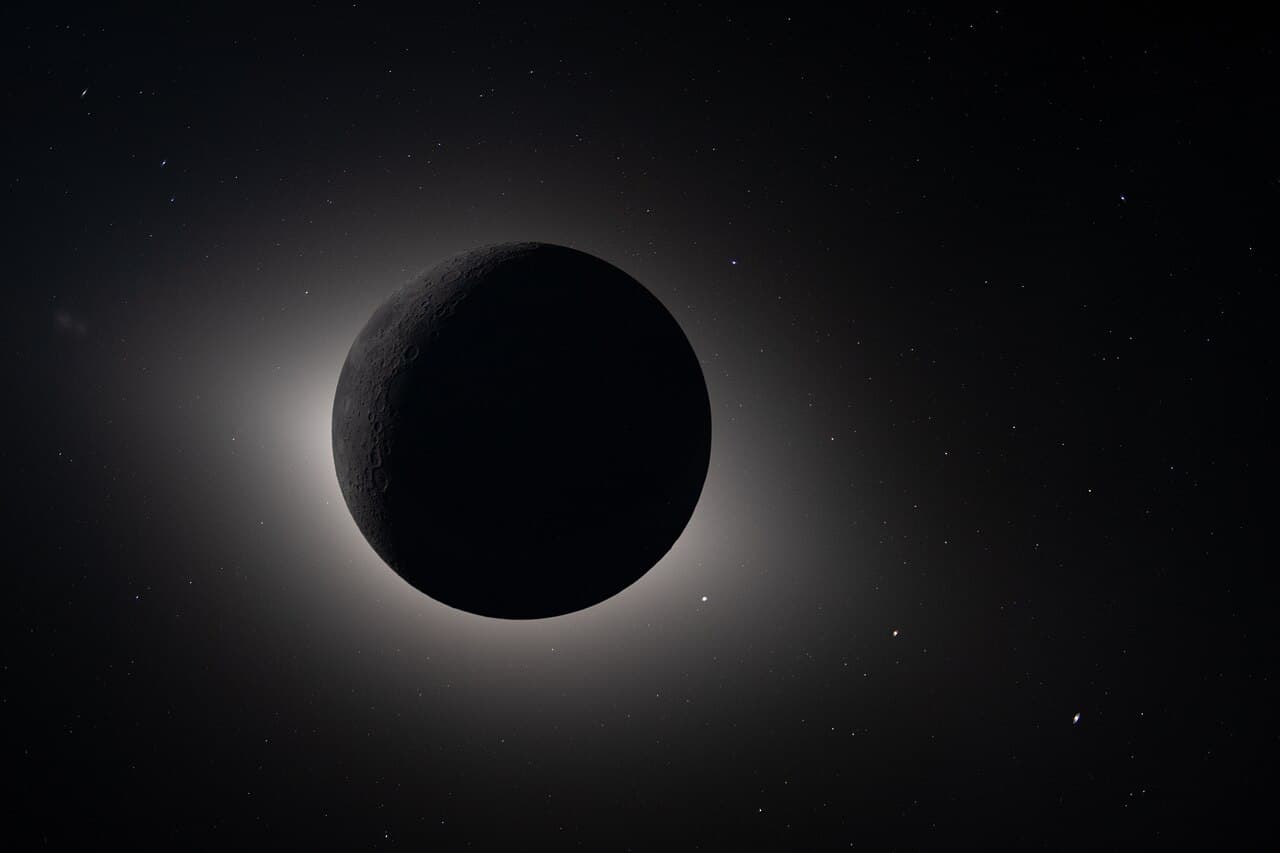
The 12 August 2026 solar eclipse will be total in Spain, marking the first such event there in over a century, while Germany sees a partial eclipse covering up to almost 90 percent of the Sun, coinciding with the Perseid meteor shower peak.
A total solar eclipse occurs on 12 August 2026. Its path of totality crosses the Arctic Ocean, Greenland, Iceland, the northern Atlantic and parts of Spain, while Germany sees only a partial eclipse. The maximum duration of totality, in the Atlantic west of Iceland, lasts 2 minutes and 18 seconds. This eclipse marks the first total solar event visible in Spain in more than a century. The eclipse will be visible across much of Europe in the evening of 12 August 2026, with observers in Germany advised to use proper eclipse glasses to prevent eye damage or camera sensor harm. In Spain, the event is a historic astronomical milestone, drawing scientific and public interest, while in Bavaria and North Rhine-Westphalia up to 90 percent of the Sun will be obscured. The Perseid meteor shower peaks around the same time, adding to the celestial spectacle. The convergence of a rare total eclipse over Spain, concurrent meteor activity, and coordinated media and aviation efforts makes this event a focal point for public engagement and research. Authorities in the Balearic Islands are preparing for large visitor numbers, and initiatives such as Iberia’s special eclipse flight and live-streaming efforts highlight its broader significance.
The 2026 Eclipse Path and Visibility in Spain
A total solar eclipse will sweep across Spain on 12 August 2026, but only in a narrow corridor of the northern territory. The broader path of totality stretches from Greenland through Iceland, the Arctic Ocean and the northern Atlantic, with maximum eclipse occurring in the Atlantic west of Iceland, where totality lasts 2 minutes and 18 seconds. Within Spain, the moon will completely obscure the sun only in select northern regions, while the rest of the country experiences a deep partial eclipse.
Observers across Spain are advised to use certified eclipse glasses to prevent eye damage, as even brief exposure to the uneclipsed sun can cause permanent injury. The duration of totality varies by location, reaching its longest point in the north before diminishing toward the south. The eclipse begins in the evening local time, with the exact start and maximum phases differing by city and elevation.
The event coincides with the peak of the Perseid meteor shower, offering a rare opportunity to view both phenomena in the same night sky. In response to the anticipated influx of visitors, authorities in affected regions are preparing public viewing areas and restricting access to ecologically sensitive zones. Specialized equipment and live streams will be deployed to extend coverage to remote areas.
This eclipse marks the first total solar event visible from mainland Spain in more than a century, drawing scientific and public interest alike. Researchers plan to study the corona and atmospheric changes during totality, while amateur astronomers prepare detailed observations. The convergence of celestial mechanics and public engagement underscores the cultural and scientific significance of the 2026 eclipse.
Germany's Partial Eclipse and Regional Variations
In Germany the 12 August 2026 eclipse is partial for every location. Low‑confidence reports indicate that observers in Bavaria and North Rhine‑Westphalia will see the Moon cover almost 90 percent of the Sun’s disc. The start time and the moment of maximum eclipse differ from city to city, but in all cases the event unfolds in the evening. Munich residents are advised to seek a protected view toward the west, where the Sun will be highest at the eclipse’s peak. When the Moon obscures most of the solar surface, only a thin crescent remains, making proper eclipse glasses essential to avoid eye injury. Using a smartphone without protection can damage the camera sensor within minutes, according to low‑confidence sources. Clear skies and an unobstructed horizon improve visibility, but local weather may vary. The partial nature of the event means that no part of Germany experiences totality, yet the degree of coverage creates a striking visual effect for those with the right equipment. Researchers at the Planetarium Freiburg have explained that the alignment of the Moon and Sun will be similar to past rare eclipses, but this one is unique for its geographic reach and the concentration of viewers in southern Germany. Observers should plan to arrive early, allow time for eye‑protection checks, and be prepared for changing light conditions as the eclipse progresses. By following safety guidance and choosing optimal viewing spots, the public can experience one of the most impressive partial eclipses of the decade.
The Perseid Meteor Shower as a Concurrent Celestial Event
The Perseid meteor shower, an annual August phenomenon caused by debris from comet Swift‑Tuttle, is expected to peak around 12 August 2026. This year, its maximum activity coincides with the solar eclipse, offering skywatchers a rare dual spectacle. While the meteors are best seen after dark, their presence adds to the public interest in the eclipse evening. Observers across Germany and Spain will experience the celestial events in close succession, enhancing the overall viewing experience.
The meteor shower’s radiant lies in the constellation Perseus, producing fast, bright streaks that can be seen with the naked eye under clear, dark skies. In 2026 the peak rates are predicted to reach roughly 100 meteors per hour, a level comparable to typical strong Perseid displays. The timing aligns closely with the eclipse’s visibility window, allowing those who remain outdoors after the eclipse to scan the night sky for meteors.
Astronomers note that the Perseids are a reliable shower, delivering consistent activity year after year. Their predictable schedule makes them a popular target for public outreach and educational programs. This year’s overlap with the eclipse may encourage observatories and planetariums to schedule special events that combine both phenomena.
Farmers’ Almanac and other sky‑watching resources have highlighted the convergence, suggesting that the combined event could draw larger crowds to dark‑sky sites. The coincidence underscores the dynamic nature of astronomical cycles and offers a unique opportunity for public engagement with astronomy.
The dual appearance of the Perseids and the solar eclipse illustrates how natural cycles can intersect to create memorable sky‑watching experiences, reinforcing public interest in astronomy and space science. Observers are encouraged to plan their evening activities to capture both the eclipse’s final phases and the subsequent meteor activity.
Public Response and Restrictions in the Balearic Islands
Authorities in the Balearic Islands have introduced a series of restrictions for 12 August 2026 in anticipation of a large influx of visitors. These measures include traffic controls, designated viewing zones and requirements for special permits for large gatherings. The region is preparing for heightened demand, particularly around the evening visibility of the partial eclipse.
Road closures and parking limitations will be enforced in coastal areas where crowds are expected. Public transport schedules will be adjusted to accommodate increased passenger volumes, and additional shuttle services will operate between major towns and designated eclipse-viewing sites. Police have been deployed to manage queues and ensure public safety, with particular focus on preventing unauthorized gatherings near beaches and open spaces.
Authorities have emphasized that organized events exceeding a certain size require prior approval. Applications for permits must be submitted at least several weeks in advance, and organizers are expected to coordinate with local emergency services. Security checkpoints may be established at key access points to monitor crowd density and enforce capacity limits.
The timing of the eclipse — occurring in the evening over the Balearic Islands — means that viewing conditions will differ from earlier in the day. While the partial eclipse will reach its peak around 20:45 local time, the exact moment of maximum coverage varies slightly depending on location. To facilitate public access to safe viewing areas, the regional government has partnered with astronomy clubs and planetariums to designate official observation points equipped with protective infrastructure.
Signage and public advisories will be distributed through municipal channels, outlining recommended practices for safe observation and crowd behavior. Digital platforms will provide real-time updates on traffic flows and weather conditions, allowing visitors to plan their movements efficiently.
Despite the restrictions, officials have expressed optimism that the measures will allow for a safe and accessible experience. The combination of astronomical rarity and cultural interest has positioned the eclipse as a major event in the region’s calendar, drawing attention from both domestic and international audiences.
Safety Measures and Viewing Recommendations
Experts stress that direct observation of the eclipse without proper eye protection can cause permanent retinal damage. Eclipse glasses certified to ISO 12312-2 standards are mandatory for all viewers. In Germany, astronomy clubs and planetariums, including the Planetarium Freiburg, are distributing free glasses and organizing public viewing events. Filming the eclipse with a smartphone without a certified solar filter risks sensor damage within minutes. The Perseid meteor shower peaks around the same time, adding to viewing interest. Authorities in the Balearic Islands are introducing restrictions due to expected visitor numbers. Observers in Munich are advised to seek protected sightlines facing west. Safety recommendations include using only certified filters, avoiding unfiltered optics, and following local guidance.
Astronomy clubs across Germany are distributing certified eclipse glasses ahead of the 12 August 2026 event, with the Planetarium Freiburg confirming it will host public viewings in multiple cities. Researchers note that Bavaria and North Rhine-Westphalia may experience nearly 90 percent solar coverage during the partial eclipse, though exact local start and maximum times vary by location. In Munich, observers are advised to secure protected sightlines facing west for optimal viewing conditions.
The Perseid meteor shower is expected to reach its peak around the same time, creating a dual celestial display. In Spain, the path of totality includes regions such as Südbaden, where the eclipse will be fully visible, while other areas like the Balearic Islands will observe it in the evening. Authorities there are implementing visitor limits and traffic controls due to anticipated crowds.
Iberia has announced a special flight on 12 August carrying scientists, cameras and Starlink equipment to broadcast the eclipse live, with free streaming accessible globally. Thomas Presper from the Planetarium Freiburg has explained that the moon will obscure most of the sun, leaving only a thin crescent visible in Germany.
Safety guidelines from astronomy groups emphasize that unfiltered smartphone filming can permanently damage camera sensors within minutes. Viewers are instructed to use only ISO 12312-2 certified glasses and avoid unapproved optical devices. Additional public events are being organized in Bochum and other urban centers to support safe observation.
Aviation and Media Coverage Initiatives
Iberia has announced a special charter flight on 12 August 2026 that will fly into the path of totality over the Atlantic, carrying scientists, camera crews and Starlink equipment to provide a live stream of the eclipse. The flight is part of a broader media effort to broadcast the event globally, with a free live feed expected to be available across multiple platforms. This initiative highlights how traditional carriers are adapting to cover major scientific events, using airborne observation to avoid weather interference and to extend coverage beyond ground stations in Spain and Germany. The route will position the aircraft above the Atlantic west of Iceland, where totality lasts two minutes and 18 seconds, allowing uninterrupted observation during the eclipse’s peak. Onboard instruments will feed real-time video and data to a public stream, which organizers say will be accessible without subscription on major video platforms. The move follows similar airborne eclipse missions in previous decades but marks the first time a commercial airline has structured a dedicated flight around a solar event with a public broadcast mandate. Media partners in Europe and North America have confirmed plans to embed reporters on the flight, aiming to combine astronomical footage with commentary from solar physicists and cultural context from regions beneath the path. The effort reflects growing demand for live cosmic coverage, particularly as eclipses draw larger public audiences and greater digital engagement. While ground-based observation remains central, especially in Spain where the eclipse will be total, the airborne component offers a unique vantage point above cloud cover and terrain limitations. This hybrid approach underscores how space weather events are increasingly integrated into media logistics, blending aerospace capability with public service broadcasting. The flight’s success could set a precedent for future eclipse coverage, particularly as commercial space access expands and real-time data demands rise. Authorities in the Balearic Islands have noted the flight’s arrival coincides with heightened visitor expectations, though no public coordination details have been released.
Historical Context and Future Eclipses
The 2026 solar eclipse is notable as the first total solar eclipse visible in Spain since 1912, a gap of more than a century. The next total solar eclipse visible from Spain will not occur until 23 September 2082, making this event a once-in-a-lifetime opportunity for most of the current population. In contrast, Germany’s next total solar eclipse will not arrive until 2081, reinforcing the rarity of the 2026 event for observers in central Europe.
The eclipse’s path of totality crosses the Arctic Ocean, Greenland, Iceland, the northern Atlantic and Spain, with the point of maximum eclipse lying in the Atlantic west of Iceland, where totality lasts 2 minutes and 18 seconds. Spain’s visibility marks a historic milestone, as no total eclipse has been observed on the peninsula since the early 20th century. German observers will see only a partial eclipse, with the Moon covering almost 90 percent of the Sun in Bavaria and North Rhine-Westphalia.
The event coincides with the peak of the Perseid meteor shower, adding a secondary celestial attraction. Researchers and media outlets are preparing special coverage, including a dedicated flight operated by Iberia carrying scientists, cameras and Starlink connectivity, with a free live stream offered to the public.
Observers are advised to use certified eclipse glasses to prevent eye damage and to avoid filming the event without proper solar filters, which can harm camera sensors. Public authorities in the Balearic Islands are implementing restrictions to manage the influx of visitors drawn by the eclipse.
The eclipse will occur in the evening of 12 August 2026 over the Balearic Islands, where special flight operations and viewing guidance are being coordinated. This alignment of astronomical phenomena underscores the event’s significance as a rare convergence of historical, cultural and scientific interest across Europe.
Scientific Observations and Research Opportunities
Astronomers plan to use the 2026 eclipse to study the solar corona, the outer atmosphere of the Sun that is normally washed out by the star’s brightness. The brief window of totality, lasting only 2 minutes and 18 seconds at its point of maximum over the Atlantic west of Iceland, will enable coordinated observations from ground‑based telescopes, airborne platforms and the Iberia special flight that will carry instruments, cameras and Starlink wifi. Researchers will synchronise spectroscopic measurements, polarimetric imaging and coronal photography to capture the corona’s structure and dynamics across a range of wavelengths. Because the eclipse path traverses Spain, where a total eclipse has not been visible for more than a century, ground stations in the Balearic Islands and elsewhere will provide unique viewpoints. Airborne observations from the charter flight will extend the duration of usable data and allow continuous monitoring of the corona as the Sun moves behind the Moon. The collected datasets aim to refine models of solar magnetic activity, improve predictions of solar flares and enhance forecasts of space‑weather effects that impact satellite operations and communications. By combining ground, air and airborne measurements, scientists hope to fill gaps in current coronal knowledge and develop new techniques for future eclipses and space‑based solar observatories.
Frequently asked questions
When is the 2026 solar eclipse?
The solar eclipse occurs on 12 August 2026. It will be total in parts of the Arctic, Greenland, Iceland, Spain and the northern Atlantic, and partial in Germany.
Will the 2026 eclipse be visible in Germany?
Yes, it will be visible as a partial eclipse in Germany. Observers will see the Moon cover almost 90 percent of the Sun in regions like Bavaria and North Rhine-Westphalia.
Do I need special glasses to watch the 2026 eclipse?
Yes, observers are advised to wear suitable protective eclipse glasses. Filming the eclipse without protection can damage a smartphone camera sensor within minutes.
Where is the point of maximum eclipse for the 2026 event?
The point of maximum eclipse lies in the Atlantic west of Iceland, where totality lasts 2 minutes and 18 seconds.
Can I see the 2026 eclipse from Spain?
Yes, the eclipse will be total in parts of Spain, marking the first total solar eclipse visible there in over a century. The path of totality crosses the country.