Germany's deadly summer of heat, drought and strained rivers
An estimated 11,900 heat deaths in Germany, a shrinking Danube throttling power plants and river traffic, and record temperatures across Europe show how this summer's heat is testing health, energy and infrastructure alike.

An estimated 11,900 people in Germany have died so far this year as a result of high temperatures, according to the Robert Koch Institute. The heat has also dried up rivers like the Danube, curbing nuclear power output and halting river cruises, while drought strains forests, farms and energy supplies across Europe.
Around 11,900 people in Germany have died so far this year as a result of high temperatures, according to estimates by the Robert Koch Institute. The deaths come as heat and drought grip much of Europe, drying out forests, shrinking rivers and straining power supplies. The pressure extends well beyond Germany's borders. Low water levels on the Danube have halted river cruise ships in Hungary and are threatening electricity supply in parts of Central and Southeastern Europe, with Hungary and Romania sliding toward an energy crisis. Warm rivers and low water are also forcing nuclear power plants to cut output, removing several gigawatts of capacity on critical days. The toll matters now because this is unlikely to be an exception. June brought record-breaking heat in several European countries, and experts expect heatwaves to arrive more often and with greater intensity. That raises hard questions about homes, farms and energy systems built for a cooler climate — and about a public whose skepticism of climate science is growing even as the evidence mounts.
Nearly 12,000 dead: heat's toll in Germany this year
Around 11,900 people in Germany have died so far this year as a result of high temperatures, according to estimates by the Robert Koch Institute. The figure makes heat one of the country's deadliest environmental hazards, and it arrives as experts warn that heatwaves are set to occur more often and with greater intensity in the years ahead.
The danger is not abstract. Prolonged exposure to extreme temperatures strains the heart and circulation, and the risk rises sharply for the elderly, the chronically ill and those without access to cool shelter. Health officials also point to a less obvious threat: alcohol. Combining drinking with hot weather can pose an acute health risk, accelerating dehydration and impairing the body's ability to regulate its temperature at precisely the moment it is under greatest stress.
That concern has already shaped official policy beyond Germany's borders. During the Fête de la musique festival in Paris, authorities imposed an alcohol ban because of the heat — a striking intervention at one of France's most popular public celebrations, and a sign of how seriously governments are beginning to treat the combination of alcohol and extreme temperatures.
The German toll underscores the scale of the challenge. The deaths estimated by the Robert Koch Institute occurred not in hospitals overwhelmed by a single catastrophe, but spread across a season of hot days — a quiet, cumulative mortality that experts say will grow unless adaptation keeps pace with a warming climate.
A shrinking Danube and throttled reactors strain Europe's power supply
The Danube, one of Europe's great commercial arteries, is running so low that river cruise ships have been halted in Hungary. The same drought and heat that drained the river are now rippling through the region's energy systems. Hungary and Romania are sliding into an energy crisis as heat records fall and Danube water levels continue to drop, with the low water threatening electricity supply across parts of Central and Southeastern Europe. Bulgaria, by contrast, is described as better prepared than its neighbours for the effects on energy supply.
The pressure extends well beyond the Danube basin. Warm rivers and low water levels are forcing nuclear power plants to reduce their output, because reactors depend on river water for cooling and cannot discharge heated water back into already warm, shallow rivers without breaching environmental limits. On critical days, these heat-related curtailments remove several gigawatts of capacity from the system, affecting grids and pushing up prices across Europe. The continent's interconnected power market means a reactor throttled in one country can be felt in electricity bills far downstream.
The annual picture is less dramatic than the daily one. Measured over a full year, the energy losses from heat-related nuclear curtailments are small. The problem is timing: the cuts arrive precisely when demand for cooling peaks and rivers are at their weakest, concentrating the strain into the hottest days of the year.
Forests under stress, farms adapting, and fire at Lake Garda
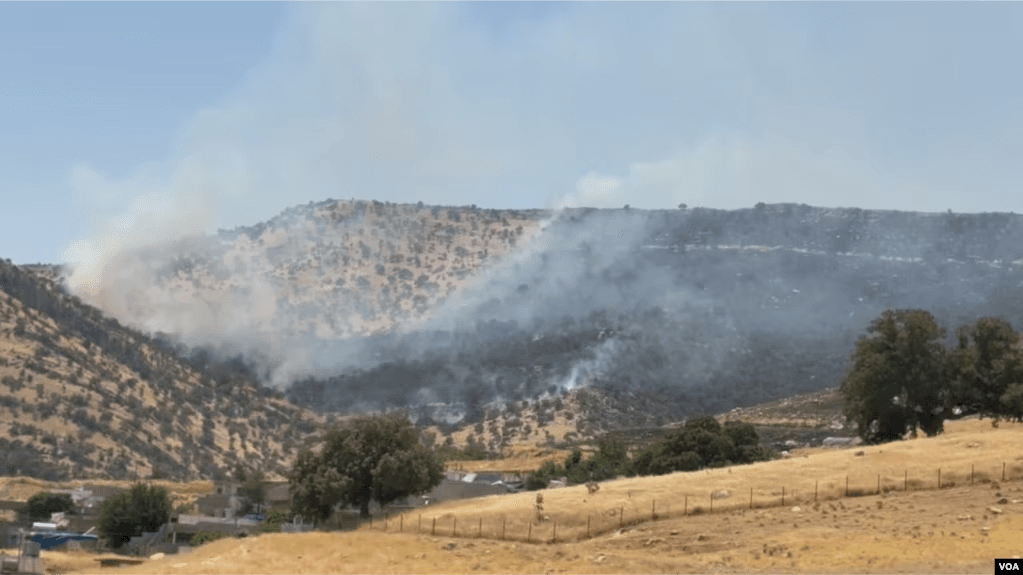
Germany's forests are bearing the strain. Drought and heat are putting woodlands across the country under pressure and creating acute fire hazards, as parched vegetation accumulates after weeks of high temperatures and little rain.
Farmers face a broader assault. Heat, drought, heavy rain and late frost have all hit German agriculture, sometimes within the same season. The response is already under way: growers are switching to adapted varieties and entirely new crops, drawing on modern breeding methods and changing how they cultivate their fields. The Kreisbauernverband Reutlingen is among the regional farming associations grappling with the shift.
The damage extends beyond Germany's borders. According to reports, a wildfire broke out on the western shore of Lake Garda in Italy, a destination popular with holidaymakers. Heat and strong winds reportedly hampered firefighting efforts, with crews concentrating on protecting residential buildings near the flames. It is not yet known when the fire started or whether it has been brought under control.
Reports also suggest that heat and drought have driven record low water levels in major rivers across several European countries, and that receding water in the Danube has exposed historical artifacts, including items dating from before the Second World War. Animal shelters in Germany, meanwhile, are said to be struggling with overcrowding compounded by the high temperatures.
Record readings and how scientists verify a hottest summer
June brought record-breaking heat to several European countries, and the extremes did not stop there. Reports cited temperatures of 48 degrees Celsius in Naples during Italy's heatwave, while Mediterranean Sea water temperatures were said to have reached 32 degrees Celsius. According to reports, heat and drought drove major rivers in several European countries to record low levels, and the shrinking Danube exposed historical artifacts, including items dating from before the Second World War. One report suggested that the summer of 2026 could become the hottest on record.
Such claims rest on careful measurement rather than impression. Experts have explained to DW how scientists determine whether a day or a summer was the hottest since records began: readings from standardised weather stations are compared against long, continuous data series, with strict rules about how and where thermometers are placed so that results remain comparable across decades. Averages are then calculated over days, months or whole seasons.
The experts also addressed why some people doubt the data. Personal experience of a single cool day can clash with a regional or national average, and mistrust of official figures feeds scepticism. But the underlying method, they stressed, is consistent, transparent and built on measurements stretching back generations.
Several European countries experienced record-breaking heat in June.
An alcohol ban was imposed during the Fête de la musique festival in Paris because of the heat.
An estimated 11,900 people in Germany have died as a result of high temperatures, according to the Robert Koch Institute.
Homes built for a cooler country struggle to cope
Much of Germany's housing stock was built for a milder climate, and it shows. Many homes are simply not designed to withstand extended periods of high temperatures, leaving residents exposed as heatwaves stretch on. Among the options available for adapting buildings to hotter conditions, air conditioning is not considered the best one — a notable position given how naturally it comes to mind as the obvious fix.
The strain of the heat extends beyond human households. According to reports, animal shelters in Germany are struggling with a combination of overcrowding and high temperatures, a double burden that leaves staff coping with more animals at precisely the moment conditions make caring for them hardest.
Together, the picture is of a built environment — homes and shelters alike — playing catch-up with a climate that has shifted faster than the walls around it.
Consensus among scientists, growing doubt among the public
The scientific position is not in dispute. Some 98 percent of active climate researchers agree that climate change is happening and that it is caused by humans. Experts expect heatwaves like those seen this summer to occur more often and with greater intensity in the years ahead.
The German public, however, is moving in the opposite direction. A new study found that the number of climate change skeptics in Germany has increased, even as the effects of a warming climate become harder to ignore. available reporting does not say when the study was conducted or by how much skepticism grew.
That gap between evidence and belief shapes the country's political argument. Climate activist Luisa Neubauer and the Fridays for Future movement have long pressed for faster action, while Chancellor Friedrich Merz's federal government faces the practical consequences of a hotter country: strained rivers, stressed forests and a mounting death toll. How scientists establish their records — and why some people doubt the data — is examined elsewhere in this report.
What happens next as heatwaves become the norm
Experts expect heatwaves to occur more often and with greater intensity, which means the pressures seen this season — on health, energy supply, agriculture and housing — are likely to return and worsen. Germany's farmers are already adapting with new varieties and cultivation methods, but many homes remain unsuited to prolonged heat, and air conditioning is not considered the best fix.
Much remains unclear. It is not known how long the Danube's low water will disrupt river cruises and electricity supply in Hungary and Romania, which nuclear power plants cut their output and over what period, or whether the summer's record readings will ultimately be confirmed. Reports suggest 2026 could become the hottest summer on record, but that has yet to be established.
Frequently asked questions
How many people have died from heat in Germany this year?
According to estimates by the Robert Koch Institute, around 11,900 people in Germany have died so far this year as a result of high temperatures. available reporting does not specify the exact year or the period covered by the estimate.
Why is the Danube's low water level a problem?
Heat and drought have pushed Danube water levels low enough to halt river cruise ships in Hungary and threaten electricity supply in parts of Central and Southeastern Europe. Hungary and Romania are sliding into an energy crisis, while Bulgaria is described as better prepared. Reports also say the low water has exposed historical artifacts, some dating from before the Second World War.
Does hot weather affect nuclear power plants?
Yes. Warm river water and low water levels are forcing nuclear power plants to reduce their output, because they rely on rivers for cooling. On critical days these curtailments remove several gigawatts of capacity, affecting grids and prices across Europe. Measured over a full year, however, the energy losses are small.
How are German farmers responding to extreme weather?
German farmers are dealing with heat, drought, heavy rain and late frost. In response, they are turning to adapted varieties, new crops, modern breeding methods and changed cultivation practices to cope with the extreme weather.
Is drinking alcohol in hot weather dangerous?
Yes, combining alcohol consumption with hot weather can pose an acute health risk. The danger was considered serious enough that an alcohol ban was imposed during the Fête de la musique festival in Paris because of the heat.