'Adding fuel to a planet already on fire': El Niño warning galvanises climate voices from the UN to Spain
As a strengthening El Niño threatens India's monsoon and pushes the climate crisis into what António Guterres calls 'uncharted territory', leaders, campaigners and satirists are all raising the stakes.

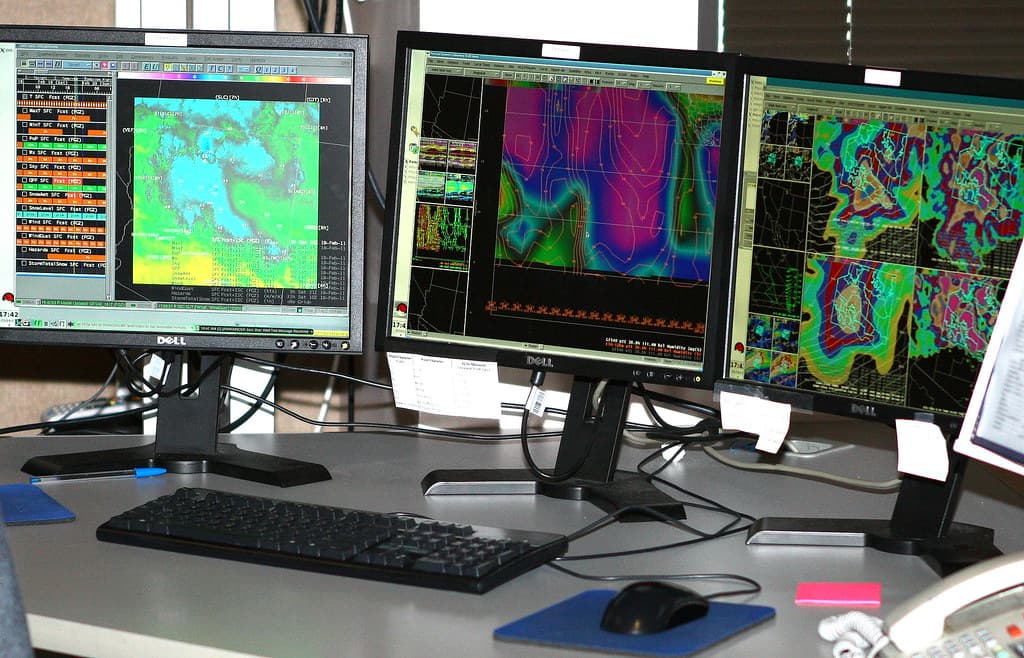
UN secretary general António Guterres warned that a strengthening El Niño is 'adding fuel to a planet already on fire' and could push the climate crisis into 'uncharted territory'. Weather experts say the system threatens India's monsoon and will bring hotter, drier conditions across much of the world.
A stronger El Niño weather system is taking hold across the globe, with forecasters warning that India's monsoon rains are in danger and hotter, drier conditions expected across much of the world. The shift has prompted stark language from the highest levels: UN secretary general António Guterres said the strengthening pattern is "adding fuel to a planet already on fire" and warned it will push the climate crisis into "uncharted territory". El Niño is a recurring climate phenomenon, but this one arrives as political leaders are already under pressure over extreme weather. Spain's prime minister Pedro Sánchez, who has long spoken out about the realities of global heating, put it bluntly: "climate change kills". His political opponents, however, remain unmoved. The warnings come alongside a separate argument about money. A Tax Justice Network report says countries could capture an extra $500bn a year by taxing multinational profits where real economic activity occurs — funds that could transform public services without raising corporate tax rates.
A stronger El Niño takes hold, putting India's monsoon at risk
A stronger El Niño weather system is taking hold, and weather experts are warning that its consequences could be severe. India's monsoon rains are in danger, they say, with hotter, drier conditions forecast across much of the world.
The warnings come as the climate phenomenon strengthens, raising alarm among those tracking its development. For India, the stakes are immediate: the monsoon underpins agriculture and water supply for hundreds of millions of people, and any disruption to the rains carries consequences far beyond the subcontinent.
Beyond India, the forecast points to broadly hotter and drier conditions across large parts of the globe. The experts consulted did not set out region-by-region projections in detail, but the overall picture they describe is one of intensifying heat and reduced rainfall as the system takes hold.
What is known is the direction of travel. El Niño is strengthening, and the warnings about the monsoon and about drier conditions elsewhere come directly from weather experts monitoring the shift. What is not yet known is how severe the effects will prove, precisely which regions will bear the brunt, or how long the system will persist. available reporting material consulted does not specify the scale of the threat to the monsoon rains, the timing of the forecast conditions, or the mechanisms by which the strengthening system will interact with existing climate pressures.
Those uncertainties matter. The warnings are clear in outline but thin on specifics, and the gap between a forecast of danger and its measured impact will only be filled as the system develops.
Guterres warns of 'uncharted territory' on a planet 'on fire'
The United Nations secretary general has issued one of his starkest warnings yet on the state of the global climate. António Guterres said the strengthening El Niño weather system is "adding fuel to a planet already on fire", framing the phenomenon not as an isolated event but as an accelerant to a crisis already under way.
Guterres went further, warning that the intensifying El Niño will help push the world's climate crisis into "uncharted territory". The phrase, delivered by the UN's most senior official, signals that the organisation now expects conditions beyond the range of recent experience — a departure from the language of forecasting toward the language of the unknown.
His choice of imagery was deliberate and repeated. Guterres described the planet as being "on fire", a characterisation he paired with the El Niño warning to underline that the natural climate cycle is arriving on top of human-driven global heating, not in place of it. In his telling, the two forces compound one another: a warming world made more volatile by a strengthening Pacific weather pattern.
The secretary general's intervention places the UN squarely behind the scientists and meteorologists tracking the system's development. By tying El Niño directly to the broader climate emergency, Guterres sought to ensure the phenomenon is read not as routine weather but as evidence of a crisis entering a new and more dangerous phase.
The UN secretary general said the strengthening El Niño is 'adding fuel to a planet already on fire'.
Spain's Sánchez says 'climate change kills' — and his opponents shrug
"Climate change kills." The three words from Pedro Sánchez leave little room for ambiguity. Spain's prime minister has never been one to soften his language on global heating, and his latest intervention continues a long record of speaking bluntly about what a warming planet means for his country and beyond.
Sánchez has spent years making the case that the climate crisis is not an abstraction or a problem for future generations. It is, in his telling, a present danger with a human cost, and he has said so repeatedly and publicly. That consistency sets him apart from many leaders whose climate rhetoric rises and falls with the political weather.
Yet the message has not moved those across the aisle. His political opponents remain unmoved by his statements, unmoved by the framing, unmoved by the urgency. The divide is not over the wording of a speech but over whether the crisis demands the response he describes.
For Sánchez, the stakes are existential, and he has chosen language to match. Whether bluntness can succeed where warning has failed is another question — one his opponents, for now, seem content not to answer.
A cartoonist skewers the 'debate of the century' between two denialists
The Australian cartoonist First Dog on the Moon has turned his pen on climate denial, depicting two denialists locked in a contest to see who can agree the most denialistly. The cartoonist frames the exchange with heavy irony, calling it "the debate of the century" and a "vibrant marketplace of ideas" — phrases that underline the point that nothing is actually being debated at all. The two figures simply vie to outdo one another in rejecting the same reality.
The identities of the two denialists in the cartoon are not yet known, and the context in which the strip appeared — its publication date and the specific event or exchange it responds to — has not been established. What is clear from the cartoonist's own description is the satirical target: a political culture in which denial of climate science is performed as competitive sport, dressed up in the language of open debate while producing nothing but agreement on refusing to act.
The $500bn a year on the table from taxing multinationals where they operate
Governments around the world are told that public services must shrink because money is tight. According to a report from the Tax Justice Network, that premise is false: countries could capture an extra $500bn a year without raising corporate tax rates at all.
The answer, the report argues, is to tax multinational profits where real economic activity occurs. Under current arrangements, large companies can shift profits away from the places where they actually employ staff, make sales and use infrastructure, booking them instead in low-tax jurisdictions. The result is a vast pool of revenue that national treasuries never see, even as they cut spending and plead austerity.
The Tax Justice Network's proposal would reallocate taxing rights so that profits follow genuine economic substance rather than accounting convenience. It is framed not as a tax rise but as a correction — collecting what is, in effect, already owed under the logic of existing systems.
The politics are acknowledged head-on. Donald Trump may reject the negotiations, the report concedes, but he cannot veto a global effort to make multinational companies answer to governments. The point is that international tax reform does not depend on unanimous consent; states acting together can move regardless of Washington's position.
The report presents the $500bn figure as a prize that governments must seize collectively. For leaders facing pressure over crumbling services and strained budgets, the message is blunt: the money exists, and the obstacle is political will, not arithmetic.
Miliband relishes a foreign secretary role defined by Trump, the G20 and climate
Ed Miliband is said to relish his role as foreign secretary, a position that demands careful negotiation with Donald Trump and preparation for impending G20 leadership. According to the characterisation, he is fired up by the challenges that come with the brief, among them Britain's relations with the EU, the climate crisis and Gaza.
The role places him at the centre of some of the most difficult files in international politics. Dealing with Trump requires a measured approach, while the G20 leadership looming ahead will test his ability to build consensus among major economies. Climate sits squarely within that agenda, alongside the continuing strain of EU relations and the conflict in Gaza.
Those who describe Miliband in these terms portray a politician energised rather than daunted by the workload. The specifics of his negotiations with Trump, and of his plans for the G20, have not been detailed. Nor is it clear precisely how he intends to approach the EU, climate and Gaza challenges. What is reported is the appetite: a foreign secretary said to be relishing a job defined by exactly these pressures.
From Thunberg's Climate Book to São Paulo's Clima, the word carries weight
The climate debate has found echoes well beyond the political stage. Greta Thunberg's The Climate Book, a collective work of non-fiction edited by the Swedish activist, first appeared in English in October 2022. Within a year it had been translated into ten further languages, among them German, Spanish, Portuguese, Italian, French, Dutch, Swedish, Danish, Norwegian and Polish — a reach that testifies to the global appetite for authoritative writing on the crisis.
The word itself has a longer cultural pedigree. In São Paulo, a magazine called Clima ran from 1941 to 1944, a lifespan of barely three years. Yet its brevity belied its impact. The scholar Ismail Xavier argues that, despite existing only briefly, Clima significantly influenced cultural criticism in Brazil. From a wartime São Paulo periodical to a bestselling international anthology, the climate theme has carried weight in print for more than eighty years — long before it dominated the political agenda it commands today.
Clima magazine founded in São Paulo, Brazil
Clima magazine ceased publication
Original English edition of The Climate Book published
Translations of The Climate Book published in German, Spanish, Portuguese, Italian, French, Dutch, Swedish, Danish, Norwegian, and Polish
Frequently asked questions
What did António Guterres say about El Niño?
UN Secretary General António Guterres said the strengthening El Niño is 'adding fuel to a planet already on fire'. He warned that the intensifying weather system will help push the world's climate crisis into 'uncharted territory'. Weather experts separately warned that India's monsoon rains are in danger, with hotter, drier conditions forecast across much of the world as a stronger El Niño takes hold.
What did Pedro Sánchez say about climate change?
Spain's prime minister Pedro Sánchez stated that 'climate change kills'. He has a long history of speaking out about the realities of global heating, though his political opponents remain unmoved by his statements on climate change. available reporting does not detail specific actions he has taken on the issue or the criticisms his opponents have made.
How much could countries raise by taxing multinational profits?
A Tax Justice Network report says countries could capture an extra $500bn a year without raising corporate tax rates. The answer, it argues, is to tax multinational profits where real economic activity occurs. The report says governments are told public services must shrink because money is tight, and calls the $500bn prize a global effort that states must seize. It adds that Donald Trump may reject the negotiations but cannot veto a global effort to make multinational companies answer to governments.
What is The Climate Book by Greta Thunberg?
The Climate Book is a collective non-fiction book edited by climate activist Greta Thunberg. The original English edition was published in October 2022. Translations followed in 2023 in German, Spanish, Portuguese, Italian, French, Dutch, Swedish, Danish, Norwegian, and Polish.
What was the Brazilian magazine Clima?
Clima was a cultural magazine published in São Paulo, Brazil, from 1941 to 1944. Despite its brief existence, Ismail Xavier argues that the magazine significantly influenced cultural criticism in Brazil.