Extreme weather summer: record heat in Europe, floods in Asia and UK heat alerts as El Niño strengthens
From record-breaking heat across Europe and deadly floods in Asia to a 7.1-magnitude earthquake in Kumamoto and 35C alerts in the UK, this summer's extreme weather has tested communities and prompted stark warnings from the UN.

Extreme weather in summer 2026 brought record-breaking heat across Europe, including a 40.3C July peak in Wieselburg, Austria, alongside deadly floods and extreme rainfall in Asia. The UK faced heat alerts with temperatures up to 35C, while a strengthening El Niño drove hotter, drier conditions worldwide, the UN warned.
A summer of extreme weather has brought record-breaking heat across much of Europe, deadly floods in Asia and an intense wildfire season, with the Austrian town of Wieselburg recording a new July peak of 40.3C (104.5F). In the UK, the Met Office issued heat alerts as temperatures climbed towards 35C, while in Japan a magnitude 7.1 earthquake struck Kumamoto prefecture, killing 38 people, and Typhoon Dolphin bore down on Okinawa with powerful winds and storm surges. The common thread, according to weather experts, is a strengthening El Niño system taking hold, bringing hotter and drier conditions across much of the world and putting India's monsoon in danger. UN secretary general António Guterres said the phenomenon was "adding fuel to a planet" that is "on fire", warning that the climate crisis was entering "uncharted territory". The consequences are immediate and practical. In Kumamoto, recovery efforts have been hampered by high temperatures and water shortages. In Britain, households are contending with housefly swarms and sleepless nights, and forecasters are already tracking a band of rain set to follow the heat.
A summer of extremes: record heat across Europe, floods in Asia
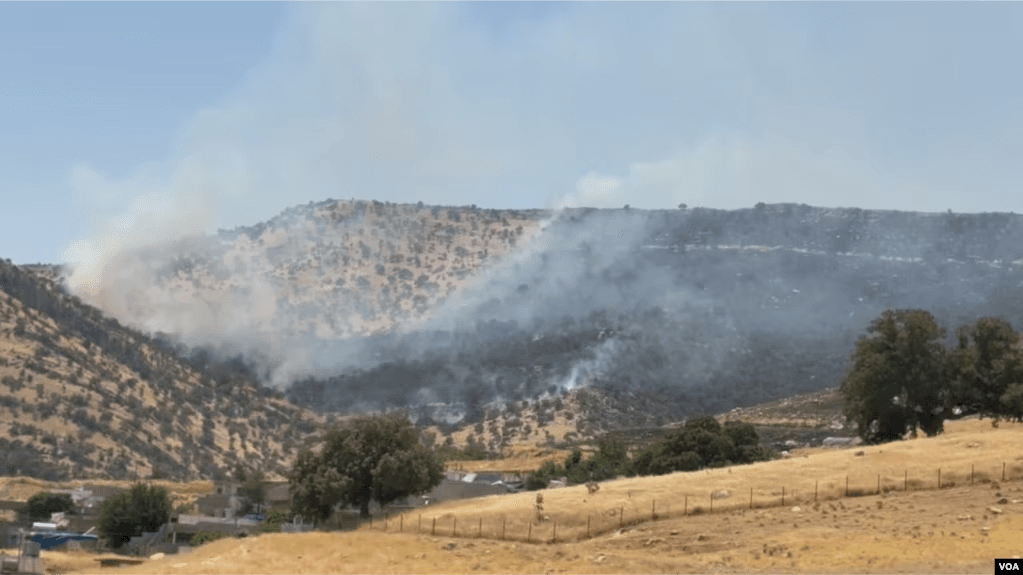
The summer of 2026 brought record-breaking heat across much of Europe, part of a wider pattern of extreme weather that stretched across two continents. In Asia, deadly heat was accompanied by severe floods, while Europe endured an intense wildfire season even as extreme rainfall struck parts of Asia. Climate-driven extremes are fuelling both.
The scale of the European heat was captured in a single reading from Wieselburg in Austria, which recorded a new July temperature peak of 40.3C (104.5F). It was one of the sharpest markers of a season in which temperature records fell across the continent.
The pattern was not confined to heat. While southern and central Europe baked, fuelling wildfires, Asia faced the opposite extreme, with floods and intense rainfall striking during the same summer months. Weather experts warned that a stronger El Niño system was taking hold, with hotter and drier conditions forecast across much of the world. India's monsoon was described as being in danger.
The combination — heat records in Europe, deadly conditions and flooding in Asia, fires and deluges within the same season — pointed to a summer in which extremes were no longer isolated events but simultaneous ones, unfolding across thousands of miles at once.
Guterres warns of 'uncharted territory' as El Niño strengthens
The United Nations secretary general António Guterres has delivered one of his starkest warnings yet on the state of the climate, saying that a strengthening El Niño is "adding fuel to a planet" that is already "on fire". He warned that the climate crisis was entering "uncharted territory".
His remarks came as weather experts cautioned that a stronger El Niño system is taking hold across the globe. The phenomenon, a periodic warming of surface waters in the Pacific, is expected to bring hotter and drier conditions to much of the world in the months ahead.
The forecasts carry particular alarm for India, where the monsoon — the seasonal rains on which hundreds of millions of people and vast areas of farmland depend — has been described as being in danger. A weakened or disrupted monsoon would have severe consequences for food production and water supplies across the region.
El Niño events are associated with shifts in rainfall and temperature patterns worldwide, and a stronger event tends to amplify extremes: drought in some regions, deluges in others. Combined with the underlying warming of the planet, experts say the conditions now taking shape point towards a period of heightened climate stress, with the effects likely to be felt unevenly but widely across continents.
Kumamoto earthquake: 38 dead as heat hampers recovery
A magnitude 7.1 earthquake struck Kumamoto prefecture in south-western Japan, killing 38 people and causing widespread damage across the region. The exact date of the quake has not been established.
Prime Minister Sanae Takaichi visited the prefecture roughly a week after the disaster to see the damage and the response effort at first hand.
Recovery work has been hampered by conditions on the ground. High temperatures have made the effort physically punishing for rescue and recovery teams, while a lack of water supplies has added to the strain on both workers and survivors. The combination of heat and water shortages has slowed progress in the hardest-hit areas and complicated the task of supporting displaced residents.
The earthquake is one of a series of severe events to affect Japan and the wider region during a period of extreme weather. While the quake itself was a geological event rather than a climatic one, the punishing heat that followed it has compounded the humanitarian challenge, leaving crews to work in difficult conditions as they attempt to restore basic services and reach those still in need of assistance.
Magnitude 7.1 earthquake strikes Kumamoto
Prime minister Sanae Takaichi visits Kumamoto
Recovery efforts hampered by heat and water shortages
Wieselburg, Austria records 40.3C July peak
Record-breaking heat across much of Europe
Deadly heat in Europe and floods in Asia; wildfires and extreme rainfall linked to climate-driven extremes
UK residents contend with housefly swarms in hot weather
UK heatwave prompts author to stop covering her arms
Okinawa faces strong winds and storm surges
Met Office warns of UK thunderstorms and up to 35C, with heat alerts
Maps indicate a four-day UK heatwave with 34C in 15 counties
Met Office expects UK to warm to around 25C
Typhoon Dolphin bears down on Okinawa
In Japan's far south, Okinawa braced for severe conditions as Typhoon Dolphin approached, with the island chain facing powerful winds and storm surges.
Details of the storm's strength, its projected path and any evacuation measures remain limited, and it is not yet clear when the typhoon was expected to make its closest pass or how it relates in timing to the season's other extreme events.
The approach of Dolphin adds to the pressure on Japan's southern prefectures at a time when parts of the country are already strained. In Kumamoto, on the island of Kyushu, recovery work following a deadly earthquake has been hampered by high temperatures and shortages of water, leaving communities vulnerable to further disruption should severe weather move north.
Authorities typically warn that storm surges pose the greatest danger to low-lying coastal areas of Okinawa, where seas can rise rapidly as a typhoon nears.
UK forecasts: 35C heat alerts, then a 615-mile band of rain
The Met Office issued a warning as the UK faced possible thunderstorms and temperatures of up to 35C, with heat alerts in place at the start of the week. The alert came amid a run of forecasts pointing to sustained hot conditions across the country.
Weather maps indicated that a four-day heatwave was expected to begin within days, with 15 counties forecast to reach 34C, according to reports based on the projections. Those figures remain provisional and should be treated as map-based estimates rather than confirmed outcomes.
Beyond the heat, attention is turning to rain. WXCharts weather maps indicate rainfall is forecast across the UK on August 10, following the period of hot weather. Forecast maps suggest a band of rain stretching around 615 miles could affect 88 areas of the UK, a sweep that would mark a sharp change from the dry, hot spell preceding it. As with the heatwave projections, these details come from forecast maps and carry the uncertainty that comes with predictions made days in advance.
Looking further ahead, the Met Office has indicated that UK weather is expected to turn warmer again over the coming weekend, with temperatures reaching around 25C. Parts of North West England are expected to see brighter conditions over the next few days, offering some respite before any further shift in the pattern.
Living with the heat: flies, sleepless nights and small adjustments
The hot weather brought smaller, stranger adjustments across the UK. In homes up and down the country, people contended with swarms of houseflies, which thrived in the heat and became a persistent nuisance through the summer.
For some, the heatwave changed habits of a lifetime. One writer described how the temperatures finally prompted her to stop covering her arms, a small personal shift that captured how the sustained warmth pushed people out of long-held routines.
Sleep proved another battleground. Experts warned that worrying about sleeping badly in the heat tends to make people feel worse, and urged those struggling not to fixate on the problem. Their advice focused on practical steps for keeping cool at night rather than fretting over lost rest — the anxiety, they suggested, often does more damage than the temperature itself.
Taken together, the flies, the sleepless nights and the abandoned cardigans told a quieter story of the summer: not records broken or warnings issued, but millions of people simply finding ways to live with the heat.
How weather is defined and measured
Behind every record in this report sits a basic discipline: defining and measuring weather. Weather is the state of the Earth's atmosphere at a specific place and time, described in terms such as temperature, humidity, cloud cover and stability. Most of the phenomena involved occur in the troposphere, the lowest layer of the atmosphere.
The measurements themselves come from simple, standardised instruments. A thermometer records temperature, an anemometer measures wind speed and a wind vane shows wind direction. Readings of this kind, gathered consistently across countries, are what allow extremes such as the 40.3C peak in Wieselburg to be verified and compared.
One distinction is worth making. Weathering is the in-situ deterioration of rocks, soils and minerals through contact with water, atmospheric gases, sunlight and biological organisms. It is not the same as erosion, which involves the transport of material away from where it formed.
BBC Weather shifts towards digital and local forecasts
The way forecasts reach audiences is changing too. BBC Weather has announced plans to make its services more digital and more local, citing the growing use of digital platforms by people checking the forecast. The shift reflects a broader change in habits: rather than waiting for scheduled broadcasts, audiences increasingly turn to apps and online services for up-to-the-minute information, and expect forecasts tailored to where they actually are. By investing in digital delivery and more localised coverage, the broadcaster aims to meet that demand — an example of how forecast delivery is adapting even as the weather itself becomes more extreme and harder to ignore.
Frequently asked questions
What happened in the Kumamoto earthquake?
A magnitude 7.1 earthquake struck Kumamoto prefecture in south-western Japan, killing 38 people and causing widespread damage. Prime minister Sanae Takaichi visited the prefecture almost a week after the quake. Recovery efforts were hampered by high temperatures and a lack of water supplies, making conditions difficult for survivors and rescue workers in the days that followed.
How hot did Europe get in the summer of 2026?
Record-breaking heat affected much of Europe during the summer of 2026, with Wieselburg in Austria recording a new July temperature peak of 40.3C (104.5F). The extreme weather included deadly heat across Europe and an intense wildfire season, while Asia saw floods and extreme rainfall. UN secretary general António Guterres said a strengthening El Niño was 'adding fuel to a planet' that is 'on fire'.
Is a heatwave coming to the UK?
The Met Office issued a warning as the UK faced possible thunderstorms and temperatures up to 35C, with heat alerts in place at the start of the week. According to weather maps reported by some outlets, a four-day heatwave was expected to begin within days, with 15 counties forecast to reach 34C. The Met Office has also indicated the UK should turn warmer over the coming weekend, reaching around 25C.
What is El Niño doing to global weather?
Weather experts warned that a stronger El Niño system is taking hold, with hotter and drier conditions forecast across much of the world and India's monsoon described as being in danger. UN secretary general António Guterres said the strengthening El Niño was 'adding fuel to a planet' that is 'on fire', and warned the climate crisis was entering 'uncharted territory'.
How can I sleep better during hot weather?
Experts advised that worrying about sleep during hot weather tends to make people feel worse, so the first step is not to stress about it. They offered practical tips for sleeping in heat, though the core message was that anxiety about lost sleep often does more harm than the warm nights themselves. The advice came as the UK coped with a summer heatwave.