Wolfgang Ischinger challenges U.S. alliance assumptions at Munich Security Conference
At the February 2026 Munich Security Conference, veteran diplomat Wolfgang Ischinger questioned whether Trump and NATO remain aligned, urging Europe to assert its strategic interests more forcefully.
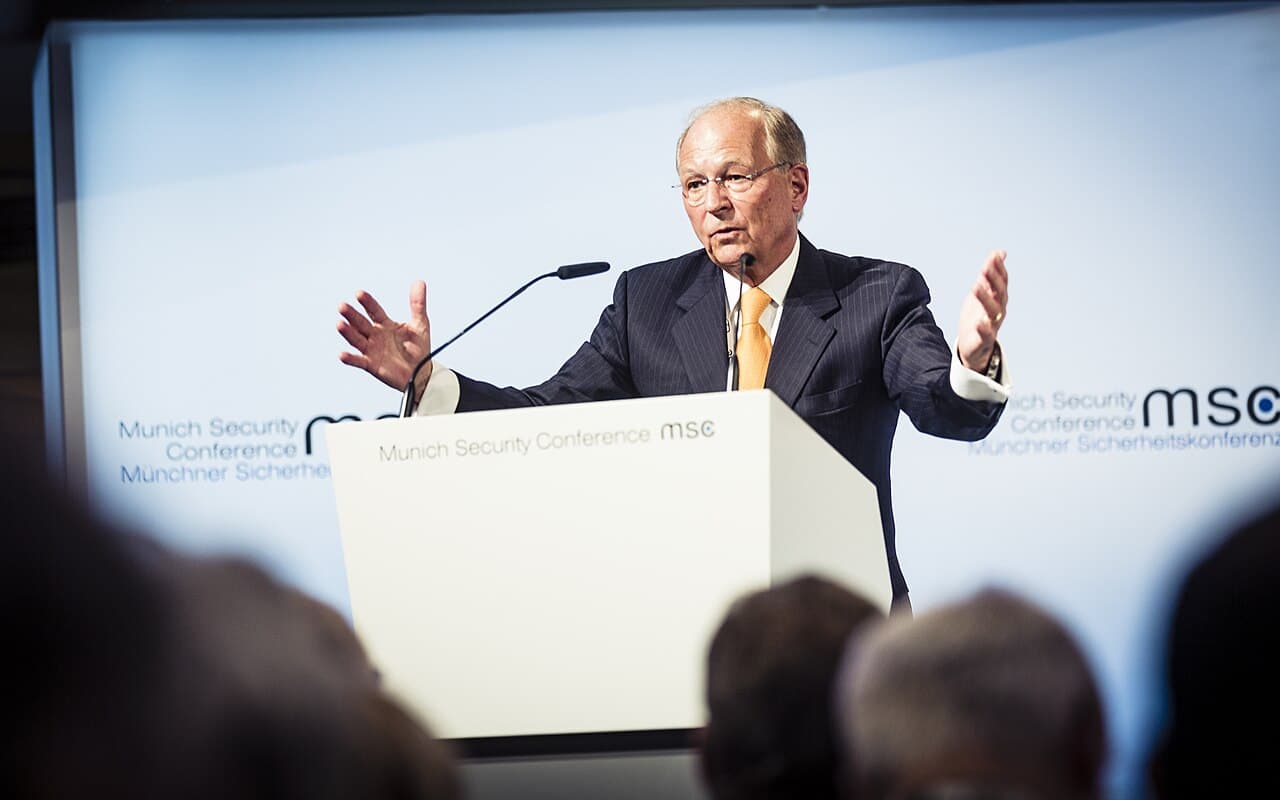
At the February 2026 Munich Security Conference, veteran diplomat Wolfgang Ischinger questioned whether Donald Trump and NATO remain aligned, urging Europe to assert its strategic interests more forcefully and speak the language of power to protect its core concerns.
World leaders gathered in Munich in February 2026 for the annual Munich Security Conference. Wolfgang Ischinger, who had led the conference from 2008 to 2022 and returned to a leadership role in February 2025, publicly questioned whether U.S. President Donald Trump and NATO remained aligned. His remarks, made at the gathering of defense ministers and security officials, underscored growing unease within European strategic circles about the reliability of the transatlantic partnership. Ischinger’s challenge to U.S. alliance assumptions emerged amid a decade of shifting security dynamics. As a veteran diplomat who served as Germany’s ambassador to the United States and the United Kingdom and headed the Munich Security Conference for 14 years, he brings deep institutional knowledge to the debate. His earlier statements — including a 2019 DW interview describing the EU as “alive and kicking” and a 2020 call for the bloc to “speak the language of power” in Libya — reflect a long-standing concern with European strategic autonomy. The 2026 conference marked his first public critique of the Trump administration’s posture toward NATO since resuming his role. The tension over transatlantic cohesion matters now because it shapes Europe’s strategic calculus at a moment of renewed great-power competition. With U.S. policy under Trump appearing unpredictable and Europe seeking greater independence in defense and technology, Ischinger’s warning reflects a broader push for European agency. His call for firmness on tariff disputes and resistance to complacency about shared values signals a pivotal moment in the continent’s foreign policy self-definition.
Ischinger's warning about U.S. alignment
At the February 2026 Munich Security Conference, Wolfgang Ischinger publicly questioned whether U.S. President Donald Trump and NATO remain on the same team, casting doubt on the durability of transatlantic cohesion. According to reports, he said the EU must speak the language of power to defend its interests and should not hesitate to threaten military action in Libya. Ischinger, who led the Munich Security Conference from 2008 to 2022 and returned to a leadership role in February 2025, also urged Europe to stand firm against Trump’s tariff plans, a call made in July 2026. His remarks underscored growing unease over U.S. alignment with traditional security partners. According to DW, he had previously described the EU as alive and kicking in 2019, stressing multilateralism. The Munich Security Conference, held annually since 1963 in Munich, Germany, remains the world’s largest gathering of its kind.
The Munich Security Conference, an annual international security policy gathering later described as the world's largest of its kind, began being held in Munich, Germany.
German diplomat and lawyer Wolfgang Ischinger, a former State Secretary in the German Foreign Office and former ambassador in Washington, D.C. and London, took over leadership of the Munich Security 2
Ischinger, described as a leading German foreign policy figure, said after that year's Munich Security Conference that there was now some degree of clarity on key concerns.
In a DW interview, Ischinger described the EU as alive and kicking and stressed the importance of multilateralism.
Ischinger said the EU should threaten military action in Libya and must speak the language of power to represent its interests, DW reported.
Ischinger's tenure leading the Munich Security Conference, which began in 2008, came to an end.
Ischinger returned to a leadership role at the Munich Security Conference.
As world leaders gathered in Germany for the Munich Security Conference, Ischinger publicly questioned whether Trump and NATO are still on the same team; his tenure as president of the conference's 2
Ischinger urged the EU to stand firm against Trump's tariff plans, according to a report.
EU's push for strategic autonomy
Wolfgang Ischinger, president of the Munich Security Conference’s foundation council until February 2026, urged Europe to adopt a forceful posture in defence of its sovereignty. Citing his 2020 warning, he said the EU must threaten military action in Libya and speak the language of power to protect its interests, arguing that weakness erodes strategic autonomy. His remarks, delivered in Brussels, framed strength as the only viable response to external pressure. By invoking past statements, Ischinger reinforced a longstanding belief that Europe cannot rely on others for security. The call underscores a shift toward assertive defence policy within the alliance.
Reaffirmation of multilateralism
Wolfgang Ischinger, a German diplomat and lawyer who led the Munich Security Conference from 2008 to 2022 and returned to its foundation council presidency in February 2025, has long framed multilateralism as the core of European power. In a 2019 interview with Deutsche Welle, he described the EU as alive and kicking, stressing that cooperation among member states is essential for global influence. He has consistently argued that shared values and collective decision‑making give Europe leverage in security and economic matters. According to reports, his recent remarks at the February 2026 conference underscored that this approach remains central to his vision of transatlantic partnership.
Call for firm response to U.S. tariffs
According to a July 2026 report, Wolfgang Ischinger urged the EU to stand firm against Trump's tariff plans, signaling a shift toward a more confrontational trade posture amid transatlantic tensions. The remarks came as world leaders gathered in Germany for the Munich Security Conference in February 2026, where Ischinger had previously questioned whether Trump and NATO remain aligned. His call reflects growing frustration within European circles over U.S. trade policies and underscores a broader push for strategic autonomy. Ischinger, who led the Munich Security Conference from 2008 to 2022 and returned to a leadership role in February 2025, has long advocated for a stronger European voice in global security and economic affairs.
Legacy and current role
Wolfgang Ischinger remains a central figure at the Munich Security Conference more than a decade after his first term as president of its foundation council. He returned to a leadership role in February 2025, continuing to shape the agenda of Europe's largest annual security forum. His long-standing influence reflects a consistent emphasis on multilateralism and European strategic autonomy within the conference's deliberations.
Frequently asked questions
Who is Wolfgang Ischinger and what role did he hold at the Munich Security Conference?
Wolfgang Ischinger is a German diplomat and lawyer who led the Munich Security Conference from 2008 to 2022 and returned to a leadership role in February 2025. He served as president of the conference's foundation council until February 2026.
When did Ischinger question the alignment between Trump and NATO?
Ischinger publicly questioned whether Trump and NATO are still on the same team during the Munich Security Conference in February 2026.
What did Ischinger say about the EU's technological capabilities?
According to a July 2026 report, Ischinger said Europe's difficulty in developing and producing leading-edge technologies is its single biggest long-term security problem.
What were Ischinger's views on EU multilateralism and Libya in 2019 and 2020?
In a 2019 DW interview, Ischinger described the EU as alive and kicking and stressed multilateralism. In 2020, he said the EU should threaten military action in Libya and speak the language of power to represent its interests.
What role did Ischinger have in the Munich Security Conference before 2025?
Before returning in February 2025, Ischinger led the Munich Security Conference from 2008 to 2022 as its president and served as president of the foundation council until February 2026.